
Many gaps do not arise from a weak message, but from poor relationship management after the first interaction with the supporter. This highlights the importance of donor management systems as tools that go beyond data preservation to organizing knowledge, improving communication, and supporting decision-making. This article is based on a published material on the Donorbox platform titled Top Benefits of CRM for Charities, with the idea presented in a professional Arabic formulation suitable for the third bank audience, while preserving the literary rights of the author and the original source.
When Donor Data Becomes a Strategic Asset, Not Just a Record
For many nonprofits, the issue is not weak messaging or limited effort, but rather the way they manage the relationship with the donor after the first interaction. How many organizations have successfully reached a new supporter, only to fail to retain them because they did not adequately save their history, or did not understand their behavior, or failed to communicate with them at the right time? Here, the conversation about technology is not just an operational improvement, but becomes part of the quality of the relationship itself.
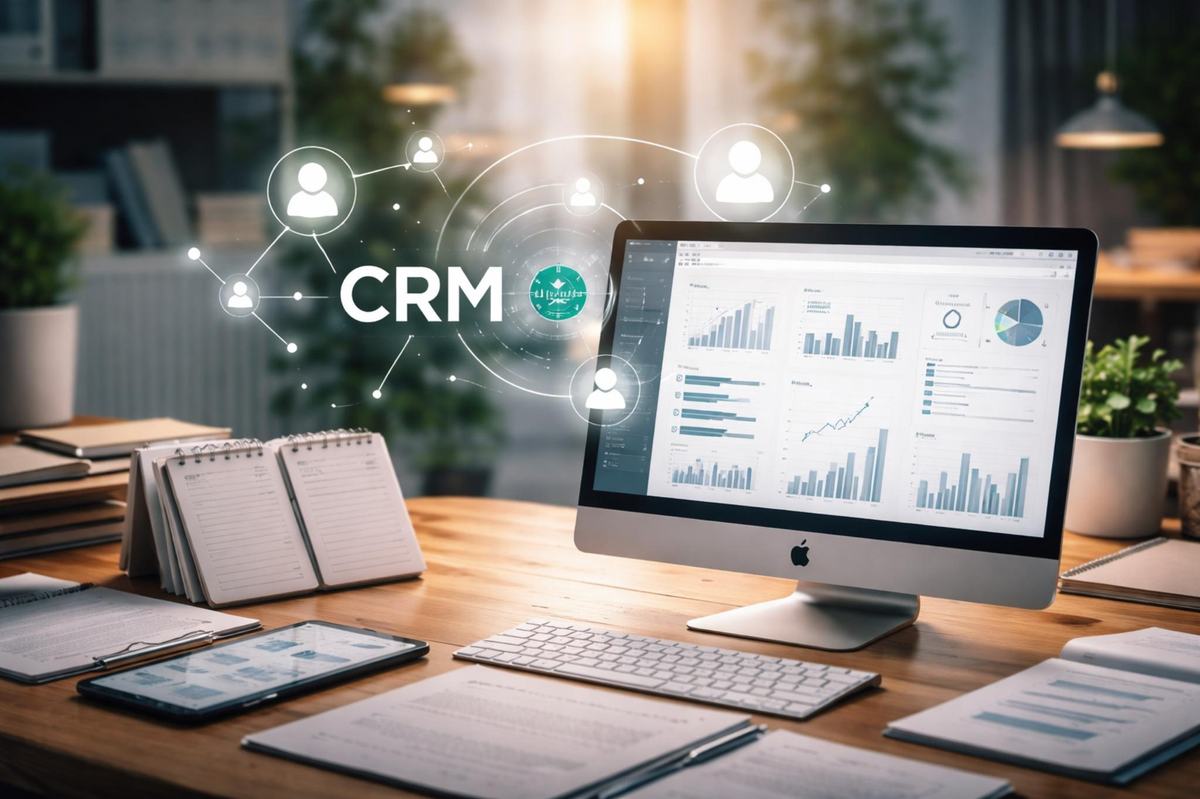
Thus, the Donor and Supporter Relationship Management system, or what is known as CRM, emerges as a tool that surpasses the idea of archiving and storage. The original article published on Donorbox defines CRM for charitable organizations as a unified center for recording supporter data and managing relationships with them, while also being used to track donation history, review interactions, generate reports, and support fundraising and communication efforts. It also notes that a large percentage of charitable organizations increasingly rely on these systems for managing donors and communicating with them.
From Data Collection to Understanding the Supporter
The true value of any CRM system does not start from being a database, but from being a means to understand the donor as a person with history, preferences, and behavior. The article clarifies that the donor's profile within the system can include their basic data, donation records, interaction history, interests, and communication preferences. This comprehensive picture helps the organization communicate with them with greater awareness and build a more personalized and effective relationship.
In the nonprofit environment, this shift is extremely important, because a donor who supports seasonal campaigns is not like a monthly donor, and a supporter who cares about reports and impact is not the same as someone who acts out of direct humanitarian impulse. The more the organization understands the categories of its supporters, the better it can provide relevant communication, more accurate messages, and a more respectful experience of the support relationship.
Clean Data Creates Cleaner Decisions
Common issues in many organizations include record duplication, data scattering across multiple files and platforms, loss of important information, or failure to update it continuously. The article points out that one of the key benefits of CRM is maintaining clean and consistent data in one place, as data scattering leads to inaccurate reports, incomplete or duplicated records, and missed opportunities in communication with supporters. It links data quality to the quality of institutional care for donors and the quality of decision-making.
Here, a crucial point emerges: disorganized data does not only harm the administrative aspect; it also affects reputation and trust. When a donor receives a repeated message, or is addressed by an incorrect name, or their name is missing from a follow-up that should have reached them, the flaw does not seem technical to them, but rather institutional.
Smart Communication Begins with Segmentation
One of the most important features of CRM is the segmentation of donors into categories based on specific criteria, such as communication preferences, average donation, or interaction patterns, and this segmentation helps make messages more personalized, instead of sending a single letter to everyone in the same way.
Additionally, many systems provide automated segmentation tools that save time and increase the effectiveness of outreach.
For nonprofit organizations, this aspect is not just a marketing luxury; it is a practical necessity. Because the difference among donors today requires differences in discourse and presentation angles. Some respond to numbers, some are moved by stories, some care about governance, and some prefer a quick, concise contribution. An organization that masters segmenting its audience becomes more capable of transforming communication from mere sending to a meaningful relationship.
From Bulk Mail to Organized Institutional Presence
We also emphasize the importance of having email tools within the CRM system itself, as this makes donor data and campaign insights available in the same place when executing bulk communication. The essence of this integration represents direct benefits for charitable organizations, especially when the systems include customizable email templates and more advanced targeting tools, not to mention examples of using this type of communication to share annual impact reports, reacquaint lapsed donors, and follow up with event participants.
Most importantly, the integration of data and communication reduces manual labor and provides the organization with better consistency; the message does not come out as a campaign separate from the donor's past history but as an extension of a relationship that the organization knows where it started and how it evolved.
Automation Is Not Coldness If Used Wisely
Another benefit is automating thank-you and follow-up messages; the article notes that systems containing automated workflows help send the right message at the right time, such as welcome chains for new donors or follow-up messages based on the donor's interaction or lack thereof. It emphasizes that this raises the quality of care and reduces the administrative burden on work teams.
In reality, the value of automation lies not only in reducing effort but also in protecting sensitive moments from being forgotten.
Because thanking a donor on time, following up after their inactivity, and celebrating the anniversary of their first contribution are all small details on the surface but have a significant impact on the supporter’s feeling that the organization sees and appreciates them and does not treat them as a passing number.
Good Reports Do Not Merely Describe the Past
CRM systems provide organizations with analytical insights that help them track the efficiency of fundraising, discover new opportunities, and assess campaign effectiveness. They can also be used to share indicators with stakeholders such as board members, emphasizing the importance of providing strong report templates that make extracting indicators faster and easier.
This means that the organization does not just get a dashboard of numbers but a tool for correction and development. Through reports, it can know where the organization achieves the best response, which types of campaigns yield better results, where donor retention rates are declining, and whether the messages sent truly reflect the actual behavior of the audience.
Artificial Intelligence Inside CRM: An Assisting Opportunity, Not a Replacement for Institutional Insight
The presence of artificial intelligence tools within some CRM systems is noted, mentioning examples such as generating donor reports in the form of charts, crafting content for campaigns, messages, and impact reports, and summarizing unread messages in email. These capabilities are presented as means to save time and resources within the organization.
However, it is important to view this development with awareness. While artificial intelligence can speed up work, reduce some burdens, and assist in analysis and writing, it cannot replace the human understanding of the relationship with the donor, nor professional judgment, nor the sincere narrative that expresses the organization’s message and true value.
What Does This Mean for Nonprofit Organizations Today?
The key message here is that CRM is not just a program for managing names but an institutional memory of the relationship with supporters. Every nonprofit needs to seriously ask itself: Do we manage donors as scattered data across multiple files, or as strategic relationships that need to be understood, nurtured, and protected?
In an environment where the competition for trust, attention, and resources is increasing, the ability to organize data, personalize communication, automate care, and read indicators becomes a critical difference between a fundraising organization today and one that builds a supporter base that remains with them for years. This is the deeper meaning conveyed by the original article when discussing the benefits of CRM for charitable organizations.
Beyond Technology: A Well-Managed Relationship Becomes a Sustainable Resource
The issue is not that every organization must rush to acquire the most complex systems, but rather that they realize that managing the relationship with supporters is no longer a side task. When data is well understood, cleaned, read, and thoughtful communication is built upon it, the organization gets closer to its audience, becomes more capable of retaining supporters, and operates more efficiently in turning good intentions into lasting impact.
This article is inspired by a published article on Donorbox titled Top Benefits of CRM for Charities, published on December 19, 2025, with a professional rephrasing and adaptation for knowledge publishing, while preserving the literary right of the original source.

Comments (3)
No comments yet. Be the first to comment!