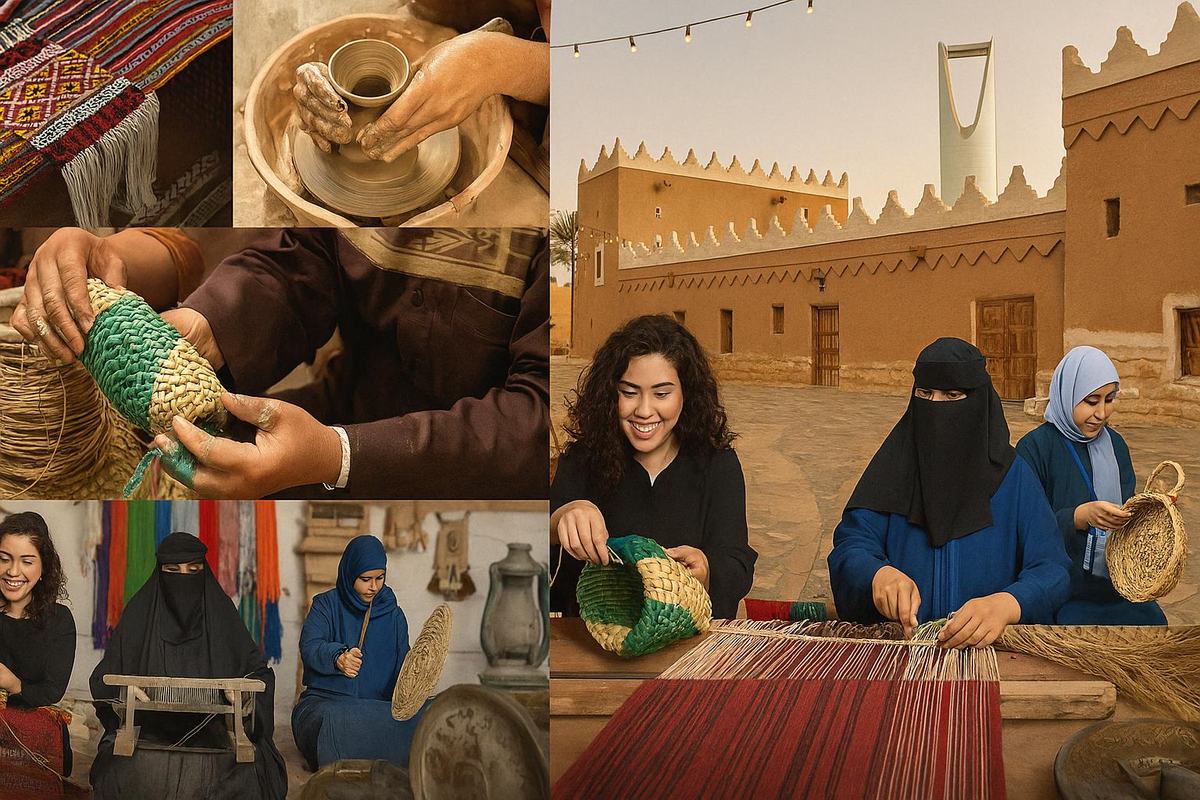

At a time when countries around the world are rediscovering their cultural identities as an economic resource, the initiative by the Saudi Ministry of Culture to declare 2025 as the Year of Handicrafts opens unprecedented doors for the nonprofit sector to reposition itself as a vital driver of development, rather than a marginal complement.
More than Heritage: Handicrafts as Community Capital
Handicrafts are not merely traditional tools but the essence of centuries of accumulated knowledge, connection to identity, and immersion in the aesthetics of the local environment. When a Saudi woman weaves a carpet from palm fronds, or an engraving is made on copper in a historical town, we are not only preserving a piece of the past, but we are creating jobs, promoting identity, and building an economic sector from the raw materials of authenticity.
In this way, the ministry's decision to name the year was not arbitrary, but came loaded with strategic messages:
- Empowering artisans as part of the national transformation.
- Enhancing the creative economy.
- Documenting craft stories as cultural narratives across generations.
How Does the Nonprofit Sector Participate?
The initiative The Third Bank in January 2025 aims to provide a practical model for the nonprofit sector's participation during this year, through a series of ideas based on studies of global citizen interaction with cultural and national events.
Here are the main activation axes:
1. Economic Empowerment
- Organizing free workshops to teach handicrafts to target groups.
- Training women and youth through skill-based employment programs.
- Supporting artisans with disabilities through professionally designed programs.
2. Digital Transformation and Social Marketing
- Establishing e-commerce stores for local artisans.
- Producing documentary and marketing content that tells the stories of the products and their makers.
- Raising awareness through media campaigns using storytelling methodology.
3. Cross-Sector Partnerships
- Linking associations with government and cultural initiatives.
- Involving the private sector in sponsoring and adopting local artisanal products.
- Engaging schools and universities in craft competitions and challenges.
Between Story and Economy: Handicrafts as a Carrier of the Kingdom's Identity
His Highness Prince Badr bin Abdullah bin Farhan Al Saud, Minister of Culture, conveyed the essence of the idea precisely in his speech about the year:
"Handicrafts are backed by unique stories and symbols that embody our land and the rich heritage passed down through generations..."
Here, we sense a qualitative shift in dealing with heritage:
From preservation to activation, from display to investment, from symbolism to production.
Vision: What Comes After 2025?
What is built during this year should not be folded away at the end of the calendar year, but should establish itself as a sustainable economic system within the nonprofit sector:
- Creating endowment investment funds to support artisans.
- Establishing handicraft business incubators within associations.
- Launching training programs on digital marketing for artisans.
- Building local brand stories from a cultural perspective.
In Conclusion:
The Year of Handicrafts 2025 is not merely a cultural event; it is an investment, educational, and developmental opportunity...
This is a moment to redefine the role of the nonprofit sector as a bridge between history and the future, between human and craft, and between authenticity and innovation.

Comments (2)
No comments yet. Be the first to comment!