
This article is part of a series of substantive knowledge articles aimed at forecasting the most prominent trends in fundraising within the nonprofit sector. It is prepared by Javan Van Gronigen, one of the leading pioneers of digital innovation in the nonprofit world, and founder and creative director of the companies Fifty & FiftyandDonately.
He is known for his commitment to driving positive change through digital design and innovative financing solutions, following his previous experiences as a technical director in prestigious companies such as Digitaria/Mirum and Invisible Children. Since 2009, he has worked on developing advanced tools that enable organizations to elevate their digital presence and maximize their impact.
The platform publishing this article, Donately, was founded in 2013 to fill a concerning gap in the online donation software market and has succeeded in building an easy-to-use, flexible, and secure donation system that supports thousands of organizations around the world. What distinguishes it is not only its high-quality technologies and commitment to security standards (PCI-compliant), but its philosophy based on partnership and continuous support, making it more than just a digital tool; it's a strategic companion for organizations aspiring to innovate and make an impact.
Introduction:
The field of fundraising in nonprofit organizations is witnessing rapid transformations that require leaders and practitioners to keep up with new trends to ensure sustainability of impact and enhance their role in serving the community.
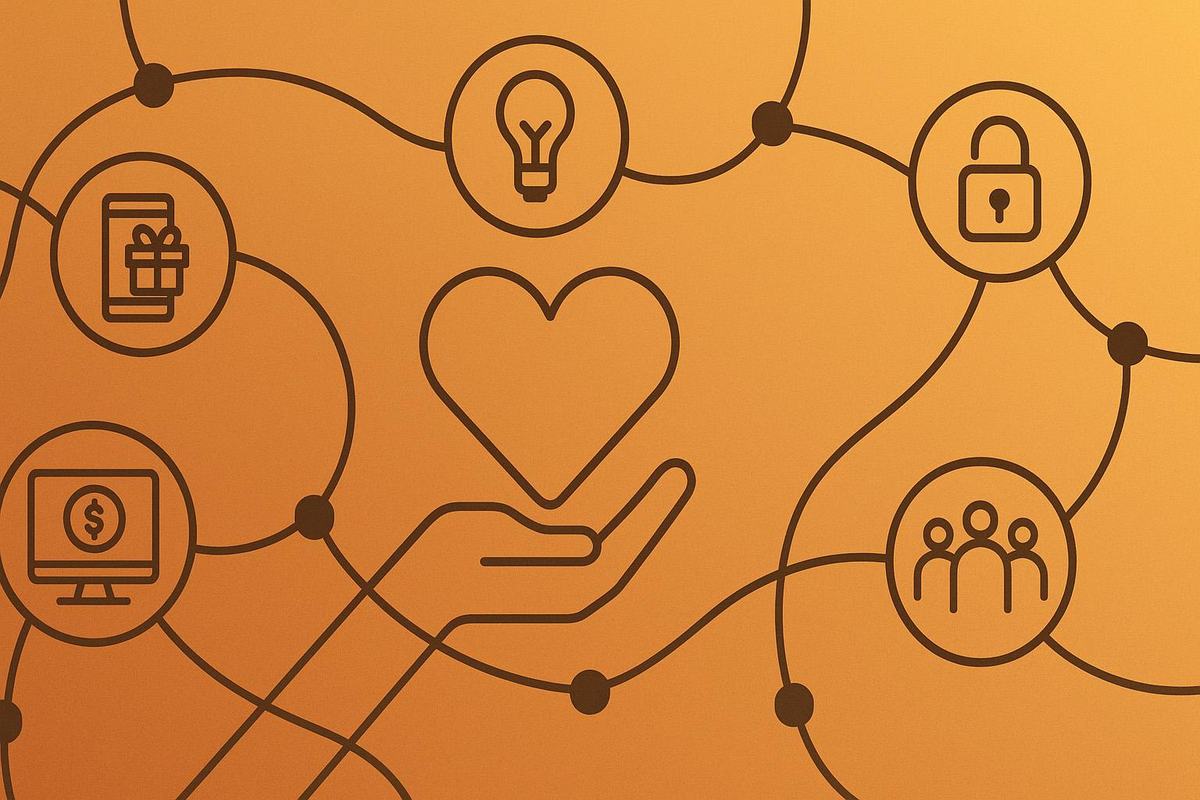
In this context, the article presents seven key trends that redefine charitable funding for the upcoming phase, in addition to a forward-looking vision for a transformative year in nonprofit work.
These trends include:
- The rise of personalized donor experiences, where personalization has become key to building greater loyalty.
- Adoption of digital fundraising platforms as a primary tool to streamline operations and deepen relationships with donors.
- Increasing importance of storytelling through social media to add a human dimension to issues.
- Heightened focus on donor privacy and data security as a cornerstone of trust.
- The rise of virtual and hybrid events to overcome geographical barriers and expand participation.
- Utilizing artificial intelligence to enhance engagement and analyze donor behaviors.
- Collaborative fundraising and community partnerships as a strategic option to expand impact and share resources.
The article concludes with a reflection on preparing for a transformative year in fundraising for nonprofit organizations, urging professionals in this sector to view these trends as opportunities for renewal and impact, not just as means to stay competitive.
As the fundraising landscape in nonprofit organizations continues to evolve, bringing with it new challenges and exciting opportunities.
Donately recognizes that staying ahead of these changes is crucial for nonprofit leaders, marketers, and engagement teams.
Trend One: The Rise of Personalized Donor Experiences
In an era where personalization reigns, the one-size-fits-all approach to engaging donors is quickly fading. Nonprofit organizations are increasingly using data to create personalized experiences that resonate with each individual donor. You can learn more about the impact of personalization in our detailed article: Future-Proof Your Fundraising.
Embracing this trend means diving deep into donor data to uncover preferences and behaviors.
Whether it's customizing your campaign to allow supporters to fundraise on your behalf or tailoring the messages shared with your fundraisers, remember that a personal touch can greatly enhance donor engagement and loyalty. For strategies on data-driven personalization, you can check out our article: Unlocking the Power of Meaningful Online Engagement.
Trend Two: Adoption of Digital Fundraising Platforms
Digital transformation in the nonprofit sector has shifted from being a luxury to a necessity. These platforms are not just tools for fundraising; they are gateways to building deeper relationships with donors and simplifying donation processes. Integrating analytics and communication tools allows for a more personalized approach for each donor.
Effectively utilizing digital platforms goes beyond merely transacting online. It's about creating an integrated system that supports donor engagement, data analysis, and targeted communication. For deeper insights on how to leverage these platforms.
Trend Three: Increasing Importance of Storytelling through Social Media
In the digital age, a well-crafted story on social media can reach farther and resonate deeper than traditional methods.
It's about crafting narratives that are not only compelling but also align with your organization's values and message.
Effective storytelling on social media requires consistency, authenticity, and a clear understanding of your audience. Engage your audience with stories that showcase impact and humanize your cause.
Trend Four: Heightened Focus on Donor Privacy and Data Security
With the increase in digital interactions, the responsibility to protect donor data has multiplied immensely. This is not merely a technical challenge but a fundamental aspect of donor trust.
Implementing strong data security measures and policies is crucial. Regular staff training and transparent communication with donors about how their data is protected can enhance trust.
Trend Five: The Rise of Virtual and Hybrid Events
These events break geographical barriers and provide an inclusive way for nonprofit organizations to engage with a global audience. They also provide data and insights on attendee engagement that can be extremely valuable for future planning.
The success of virtual and hybrid events hinges on how well you engage your audience and how seamlessly technology integrates. Focus on interactive elements and smooth tech integration.
Trend Six: Utilizing Artificial Intelligence to Enhance Engagement
Artificial intelligence (AI) is no longer just a buzzword; it has become a key player in how nonprofits enhance donor engagement and operational efficiency. For medium-sized organizations, AI tools provide a cost-effective means to personalize communication, analyze donor data, and predict giving patterns.
Investing in AI doesn’t have to be overwhelming. Start with AI-enabled donor relationship management (CRM) systems. These technologies can help understand donor preferences and create more targeted campaigns.
Trend Seven: Collaborative Fundraising and Community Partnerships
Medium-sized nonprofits are increasingly finding strength in collaboration. Joint fundraising efforts and partnerships with other organizations and businesses can lead to shared resources, broader reach, and increased impact.
Look for partnership opportunities with organizations and businesses that share your values or goals. Collaborative events, joint grants, or co-marketing campaigns can be effective. To understand the power of collaboration in fundraising.
Preparing for a Transformative Future in Fundraising for Nonprofit Organizations
As we look towards the future, it is clear that the fundraising landscape in nonprofit organizations is evolving rapidly, entering an exciting phase of innovation and collaboration.
Embracing these trends is not just about staying relevant; it's also about maximizing impact in a changing world. As we navigate these emerging trends, it becomes evident that for nonprofits, it’s not just about growth; it’s about creating a broader and deeper impact.
Towards a New Horizon for Fundraising
The seven trends reveal a fundamental truth: fundraising is no longer just a financial transaction; it has become an integrated science where digital personalization, storytelling, data security, and technological innovation intersect with community collaboration and strategic partnerships. The success of nonprofit organizations in the next phase depends on their ability to read and adopt these transformations as a comprehensive operational system, not as isolated options.
As the world opens up to new forms of engagement and impact, the opportunity for charities and philanthropic institutions lies in turning these trends into practical tools that enhance donor trust, expand the scope of impact, and open wider horizons for sustainability. The year 2025 is not merely a timeline; it is a test of the nonprofit sector's ability to transition from traditional reliance to building smarter, more flexible, and effective funding systems.

Comments (3)
No comments yet. Be the first to comment!