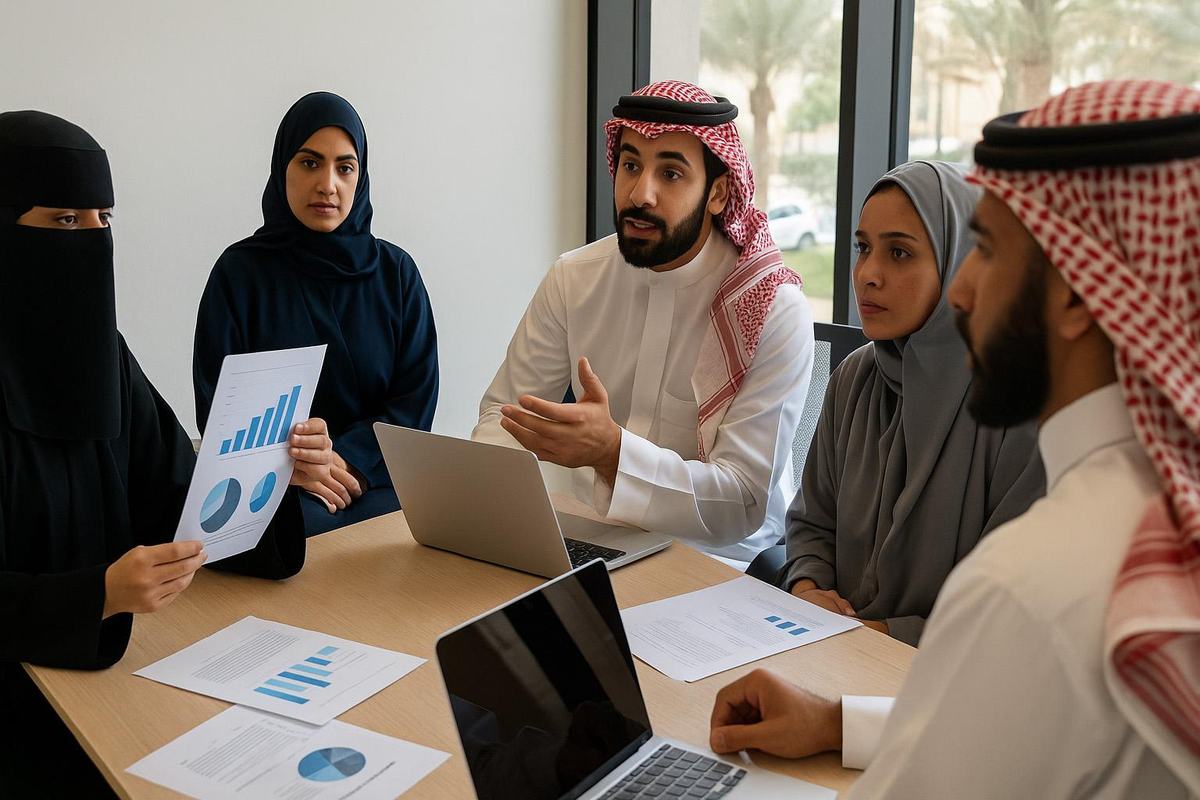

This article was published on the blog of Safeguard Global titled: "6 Hiring Challenges in Nonprofits and NGOs" and highlights the main obstacles that non-profit organizations and NGOs face in the hiring process, while providing practical and applicable solutions.
The article is based on recent data from international sources, such as Salesforce and Philanthropy News Digest, and includes accurate statistics such as a turnover rate of 19%, showcasing innovative solutions such as hiring through "Employer of Record" (EOR) providers.
In this text, we present the article again with its reflections on the reality of the Kingdom of Saudi Arabia, where the non-profit sector is witnessing significant development in light of Vision 2030, which aims to raise its contribution to the GDP to 5% and increase the number of volunteers and full-time workers in this sector.
1. Lack of a Clear Hiring Strategy
Although the success of any organization is linked to its ability to attract the best talents, more than 60% of non-profit organizations globally do not have a formal hiring strategy. Instead of proactive planning, many entities resort to temporary solutions: a job posting, quick screening, and hope for the best.
In Saudi Arabia, many associations rely on random hiring or personal relationships, which weakens their ability to build sustainable teams.
The Solution:
- Internal review of hiring indicators: How many candidates applied? What is the duration of job vacancies? How many employees have stayed for more than a year?
- Clear definition of roles and responsibilities.
- Use professional tools for applicant management.
- Diversify hiring channels, including digital marketing and referral networks.
- Collaborate with specialized recruiting agencies in the development sector.
2. Weak Employment Brand
About 70% of non-profit organizations globally do not build a distinctive employment brand, even though this brand is what makes a candidate say, “I want to work here.”
In the Kingdom, most associations still focus their marketing on beneficiaries or supporters, neglecting to market themselves as a role model workplace.
The Solution:
- Explore what your current employees like about the work environment.
- Define the Employee Value Proposition (EVP): Why do people join you? What keeps them there?
- Highlight non-financial benefits: community impact, flexibility, access to leadership.
- Integrate these values into the website, job advertisements, and interviews.
3. High Turnover Rate
The annual turnover rate in non-profit organizations is about 19%, compared to only 10% in the private sector.
In Saudi Arabia, the non-profit sector struggles to retain talent, especially in small cities or field jobs.
The Solution:
- Address the root causes: low salaries, lack of career advancement paths, increased pressure.
- Adopt a culture of psychological and professional support.
- Create opportunities for growth within the organization through internal promotions.
- Seek recruiting providers when needed to reach more suitable candidates.
4. Transition to a Digital-First Model
Salesforce predicts that most work in the non-profit sector in the next 5 years will be online, whether in operations or fundraising.
In Saudi Arabia, many associations have started the digital transformation, but still lack clear strategies or qualified personnel.
The Solution:
- Reassess strategies to keep pace with digital transformation.
- Empower employees to work remotely under flexible systems.
- Build an internal culture that fosters connection despite geographical distance.
- Invest in robust technical infrastructure.
5. Complexities of International Hiring
Organizations with an international character face legal and administrative challenges in hiring personnel across borders: from taxes to contracts and classifications.
In Saudi Arabia, associations seeking regional or Gulf cooperation face these challenges, especially with differing regulations.
The Solution:
- Collaborate with solution providers like "Employer of Record" to handle hiring on your behalf.
- Ensure contracts comply with local laws in each country.
- Understand social norms in hiring, such as expected benefits in India, Pakistan, or Egypt.
6. Skills Gap
With the increasing need for jobs that rely on technology and analytics, job vacancies exceed the available talents.
In Saudi Arabia, many associations suffer from a lack of expertise in planning, digital transformation, and innovation.
The Solution:
- Attract experienced professionals in the later stages of their careers who wish to transition to community work.
- Guide them to train the new generation of employees within the organization.
- Build professional development programs to transfer skills from generation to generation.
- Consider internal training as a strategic investment for the organization.
How Can Non-Profit Organizations Overcome These Challenges?
It may seem challenging to overcome all the international hiring challenges faced by non-profit organizations and NGOs,
but according to your organization's specific needs, addressing only the most pressing challenges may be enough to make a real difference.
The hiring process should not be an obstacle for your organization,
but rather should be an opportunity to discover the best talents that passionately propel the organization's mission and impact forward.
We are here to help you achieve your goals in talent acquisition and hiring,
to contribute together to making this world a better place by providing content that gives you ideas to overcome the challenges you face in your non-profit work.
In the end, hiring in the non-profit sector is not just a vacancy to be filled, but a direct investment in the organization's mission, and a tool for building a more just and sustainable future.

Comments (2)
No comments yet. Be the first to comment!