
Introduction: When the Executive Director Becomes the Compass for Transformation
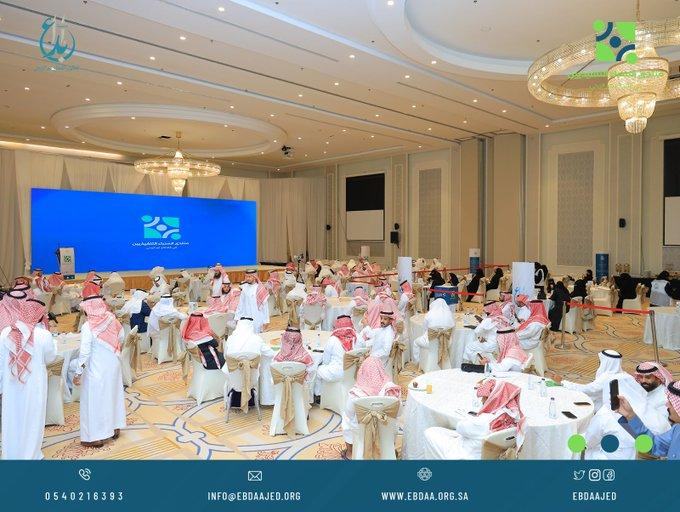
In an era where changes accelerate and challenges grow before the non-profit sector, the roles of the executive director are no longer limited to administrative management or good execution; instead, they now require strategic leadership that combines a deep understanding of governance, the ability to build partnerships, develop teams, and draw a future for associations with a wide institutional horizon. This is what the Creativity Association sought to highlight to develop the non-profit sector through the Forum for Executive Directors, which was held on Monday, May 19, 2025, corresponding to 21 Dhul-Qi'dah 1446 AH.
The forum represented a qualitative professional station that brought together a select group of executive leaders and experts in the sector, with its scientific papers discussing essential issues on the management table: from the relationship with the board of directors to strategic partnerships, and through team building and leadership succession.
This summary was prepared and executed by Mr. Munir bin Uwaid Al-Yazeedi, the executive director of the Bani Yazid Memorization Association, which enhances the literary and professional value of this work that we present here in the form of a scientific journalistic report.
Paper One: The Strategic Relationship Between the Executive Director and the Board of Directors
Dr. Khalid Al-Surihy
General Director of the International Center for Research and Studies "Midad"
The forum began with its first paper that addressed the pivotal relationship between the executive director and the board of directors, where Dr. Khalid Al-Surihy explained that this relationship is not merely administrative organization, but represents one of the greatest assets of the association. The maturity of the relationship between the two parties reflects on the effectiveness of governance, and on the association's ability to achieve its mission with excellence, as well as its credibility before regulatory and donor entities.
Dr. Al-Surihy proposed eight vital rules to regulate this relationship:
- Clarity of the common goal: serving the religion and the community.
- Clearly defining roles and responsibilities.
- Establishing a clear methodology for decision-making.
- Continuous effective communication.
- Commitment to laws and regulations.
- Periodic evaluation of the board and director's performance.
- Having a mechanism to resolve disputes.
- Strengthening social and professional ties.
The paper emphasized that a balanced relationship between the board and the director is not built in an instant, but requires conscious investment in building trust, clarity in pathways, and real empowerment that reflects the maturity of the entity.
Paper Two: The Executive Director and Stakeholders (Regulatory and Donor Entities)
The second paper highlights the role of the executive director as a pivotal link between the association and stakeholders from regulatory and donor entities. The paper confirmed that the success of any non-profit association is directly related to the capacity of its executive director to communicate transparently with those entities.
The most prominent challenges in this aspect were presented, including:
- Weak analysis of the common intersections between the association's goals and the priorities of donor entities.
- Lack of familiarity with new grant policies.
- Relying solely on formal reports without linking them to actual results.
The paper provided several practical recommendations:
- Respecting the association's specialty and clarity of its uniqueness.
- Providing smart reports based on impact.
- Using success stories as a tool to persuade donors.
- Enhancing field visits and direct meetings.
- Building initiatives that align with donor orientations.
The paper also called for considering transparency and feedback as part of the institutional structure and building long-term communication strategies that contribute to the stability of the association and enhance its funding opportunities.
Paper Three: The Executive Director and the Executive Team – From Trust to Empowerment
Dr. Dhi’f Allah Al-Nami
Executive Director of the Al-Wedad Charity Association for Orphans Care
This paper presented a deep perspective on managing the relationship between the executive director and his team, clarifying that successful leadership is not achieved without building trust, clarity of expectations, and empowering the team to make decisions and grow professionally.
Dr. Dhi'if Allah Al-Nami focused on the importance of first building trust, stating that "a manager who does not trust his employees will not give them what they need to excel." The paper began with the necessity of institutionalization and internal governance to ensure a mature work environment, where delegation is distributed consciously, and empowerment is practiced not as a formal procedure, but as an organizational philosophy.
Among the most prominent ideas proposed:
- Continuous follow-up without micromanagement.
- Treating resistance to change as a natural matter.
- Encouraging constructive criticism and respecting the idea, not the person.
- Effective motivation: from a word of thanks to providing opportunities.
The paper also indicated "threats to the relationship" such as fictitious achievements, overstepping authority, and excessive centralization. It concluded with a detailed recommendation about the necessity of integrating cultural elements (trust, communication, motivation) with organizational elements (accountability, clarity of roles, governance) to create an exceptional team.
Paper Four: Building the Second Tier and Leadership Succession
Dr. Fahd Al-Zahrani
General Director of the Zamzam Health Association
In a rich and profound paper, Dr. Fahd Al-Zahrani discussed the concept of leadership succession and the importance of building a second tier of staff within associations. The paper commenced from the premise that charitable work is not built on individuals, but on institutions, and that creative leadership is not inherited, but built according to a conscious, strategic methodology.
The paper explored practical concepts such as:
- Analyzing functional competencies to build real qualification programs.
- Professional fellowships and executive master's programs as means to qualify leaders.
- Involving the second tier in committees and executive groups.
- Documenting knowledge within a comprehensive document that does not rely on "oral memory."
Some models that were reviewed included: the Zamzam experience in building internal leadership over 6 years, with a clear career path for each leader.
The paper issued two important warnings:
- Token empowerment: when powers are granted without real impact.
- Silent resignation: when an employee feels let down and stops giving without leaving.
The core message was clear: investing in the second tier is not an organizational luxury, but an existential necessity for the sustainability of the entity.
Paper Five: Strategic Partnerships as a Lever for Institutional Transformation
Eng. Mousa Al-Mousa
Executive Director of the Abdul Rahman Al-Rajhi Charity Foundation
The forum concluded with a paper that had a purely strategic character, where Eng. Mousa Al-Mousa spoke about partnerships as a central tool for achieving impact and sustainability. The paper differentiated between "collaboration" and "partnership," clarifying that true partnership is based on a common denominator and mutual interests.
The paper divided the roles of partners into four:
- Knowledge (expert)
- Money (funding)
- Relations (mediator)
- Effort (executive)
The paper then presented the gains of partnerships for non-profit organizations, such as:
- Institutional influence.
- Diversity of human resources.
- Raising the quality of governance.
- Maximizing impact.
Among the most significant attributes of an executive director capable of building partnerships were:
- Broadness of influence.
- High professional sense.
- Innovation and negotiation skills.
- Understanding of sectoral pluralism.
The paper concluded by highlighting the main challenges of partnerships: difficulty in accessing funding, building the right team, aligning goals, and institutionalizing the partnership through documentation and evaluation.
In Conclusion: Establishing Professionalism… Not Spontaneity
The Forum for Executive Directors was not a fleeting meeting, but a foundational step towards building professional leadership models within the non-profit sector. The Creativity Association utilized this meeting to provide applicable scientific content directed specifically at field needs, benefiting from real experiences and credible practices.
And if the non-profit sector in the Kingdom aspires to multiply its impact in Vision 2030, then building a professional executive director is the first building block on this path.
This report was prepared based on the summary prepared by Mr. Munir bin Uwaid Al-Yazeedi, the executive director of the Bani Yazid Memorization Association, and published as part of the forum's proceedings organized by The Creativity Association for Developing the Non-Profit Sector.
All rights reserved for the authors and organizing entities.

Comments (4)
No comments yet. Be the first to comment!