
Introduction: Ten Minutes Equals a Life
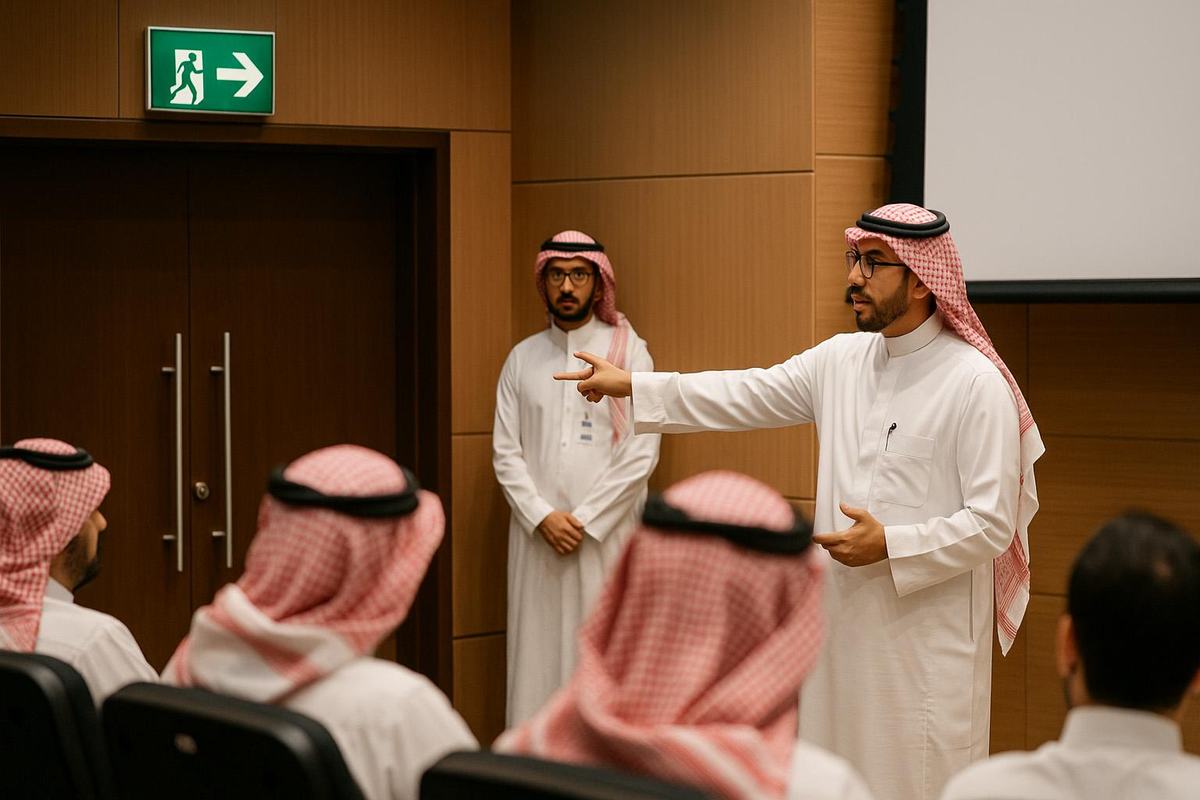
Before the forum could start, Saad Al-Hussein – a representative from the General Directorate of Security and Safety – stood to read detailed emergency instructions to the attendees: identify the nearest exit, leave belongings behind, use stairs only, head to the assembly point, and remain calm. The speech seemed protocol-driven at first glance, but it summarizes a philosophy that the ministry seeks to instill: every educational event must be planned so that 'zero accidents' is a measurable goal, not just an empty slogan.
1. The 'Ten Minutes' Rules Before Starting Any Event
Minute | Action | Operational Goal
1–2 | Announce the location of emergency exits and evacuation route | Reduce response time upon alarm
3–4 | Explain the use of stairs and the prohibition of elevators | Prevent congestion and ensure evacuation route remains clear
5–6 | Identify external assembly points | Ensure headcounts and prevent re-entry into the building
7–8 | Assign a volunteer team (class guide, route guide) | Distribute responsibilities and avoid crowding
9–10 | Confirm the internal emergency number and communicate with security | Standardize communication channels and prevent rumors
Summary: Allocating ten minutes in the official program allows for 100% of the time later to conduct the event without stress, demonstrating the professionalism of the organizing body to attendees and regulatory authorities.
2. Emergency Checklist (Printable Template)
Item | Completed? | Comments
Evacuation plan posted at every exit | ☐ | Update the map every six months
Smoke detectors and sound alarms inspected | ☐ | Monthly inspection documented in maintenance log
Emergency lighting operational for ≥ 90 minutes | ☐ | Semi-annual testing
Trained volunteer team (≥ 3 members/100 participants) | ☐ | Basic training with civil defense
First aid kit + AED device | ☐ | Clearly visible and announced location for attendees
Electronic attendance record via QR code | ☐ | Enables tracking of individuals during evacuation
3. Cost of Errors vs. Cost of Prevention
Scenario | Expected Direct Cost | Approved Prevention Cost
Loss of one evacuation route (crowded elevator stops) | Injuries + 15-minute delay = Bad reputation that may lose a donor | Installation of guidance lighting 2,500 riyals
Failure to test smoke detector | False alarm halts event for 30 minutes | Monthly inspection 300 riyals
Lack of training for the organizing team | Minor stampede results in one injury (treatment + compensation costs) | Free two-hour workshop with civil defense
The opening message of the forum translates here into numbers: Spending a thousand riyals on prevention saves tens of thousands of riyals from lost reputation and support.
4. Practical Model for Your Organization (Within a Month)
Week | Task | Responsible
1 | Review checklist and identify gaps | Program Director
2 | Request basic training from civil defense + inspect exits | Security Officer
3 | Install or maintain lighting and smoke detectors | Administrative Affairs Department
4 | Conduct a documented video drill evacuation 'Drill' | Volunteer Team
Practical Conclusion
The safety guidelines that appeared routine at the forum's opening are in fact a condensed roadmap. Adopting the 'ten-minute rule' and this checklist transforms any event or school day from unknown risks into a tightly controlled event. Zero accidents is not an ideal aspiration; it is an inevitable outcome of simple, repeated, and low-cost steps.

Comments (1)
No comments yet. Be the first to comment!