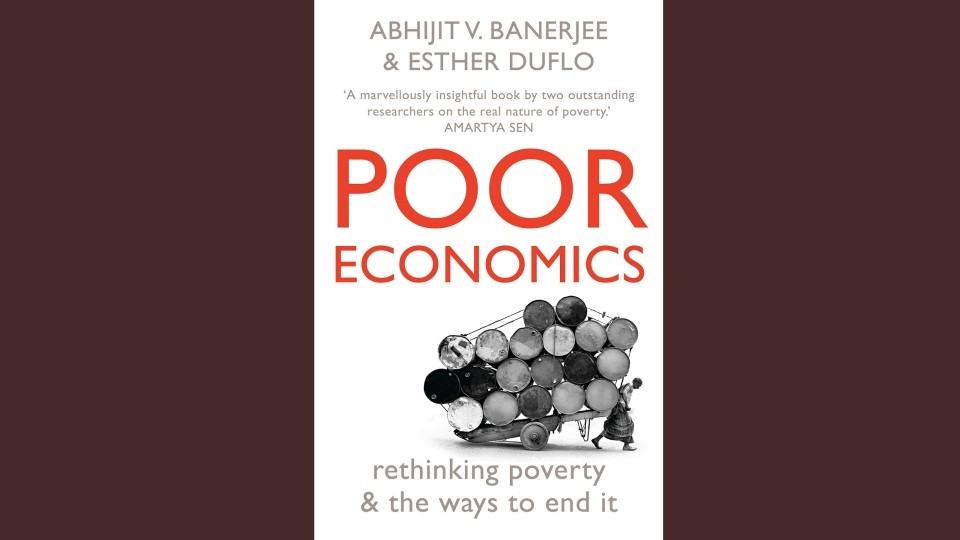

These are the key insights I gathered from the book 'The Economy of the Poor: A Reevaluation of Poverty Alleviation Methods' by Abhijit Banerjee and Esther Duflo, both Nobel Prize winners. The book was published in 2011 and was translated in 2016.
The translated book consists of 469 pages translated by Anwar Al-Shami.
The book relies on collecting field data through interviews in eighteen poor countries, where the income per person does not exceed one dollar a day, and it heavily relies on randomized controlled trials (meaning the poor who receive an intervention vs. those who do not, and measuring the outcomes of the intervention). The author then compares the data and results to economic theories, discussing them in a beautifully logical manner.
The book is very important for anyone working with the poor and needy, and the insights I've selected are the author's opinions, which I did not interfere with; rather, I selected them as they appeared, but I may adjust their phrasing at times. These insights do not replace reading the original book whatsoever.
Introduction to the Book:
The book tries to answer the question: do the poor have methods they can follow to improve their lives? Is the beginning of these methods difficult, or is the persistence until the end the difficult part? Why are these methods costly? Do people recognize these benefits? And if they do not recognize them, what prevents them from doing so? And if they do recognize them, why do they not support them?
It will discuss the role of the poor with themselves and the role of the institutions that deal with the poor.
The author begins with the essential aspects of the family life of the poor, such as the culture of buying, educating children, personal health, family relationships, reproduction, saving, loans, entrepreneurship, and others, and whether these issues are the causes of poverty, thus he will discuss them in detail throughout the book.
The author states that around nine million children under the age of five die each year in the world, and in Africa, one in three women dies during childbirth, while in the developed world the ratio is 5600 women where only one dies during childbirth. In India, fifty million children go to school but cannot read a text written in the simplest words, so rethink how to deal with the poor.
First: Assistance:
The services provided to the poor are not a magic wand suitable for all times and places; some are harmful rather than helpful, and some are helpful in certain places but not in others. The author recounts theories of the poverty trap, where he says:
The first trap: for a poor person's income to become less than yesterday's for any reason, such as illness or disability or lack of job availability.
The second: for a poor person's income to increase, but the increase is not in the right direction, such as unstudied loans.
The author comments that these theories formulated in offices do not hold in the practical side, stating that the success of assisting a simple farmer with fertilizer who became a wealthy farmer is not that simple, as telling a success story and generalizing it raises the question of whether the reason for wealth is obtaining fertilizer or saving or nutrition and health or social nature or others.
The author believes that the issue of poverty is framed among specialists in two opposing views:
The first opinion: that the poor are trapped in poverty due to their geographical, social, and financial locations and must always be assisted until they get out of it.
The second opinion: that assistance to the poor is more harmful than beneficial, and there is no such thing as a poverty trap; the poor, like others, can overcome their difficulties and poverty, and only free markets should be found.
Both opinions have a lot of research and studies supporting them.
The author states that this book will not tell you whether assistance is beneficial or harmful to the poor; it varies according to who provides it and who receives it. Assistance, no matter how large from the provider's perspective, is very small compared to the resources of the countries of those very poor people. Secondly, it doesn't matter where the funds come from, but the important thing is where these funds are spent and what the suitable projects are for uplifting the poor. Thirdly, assistance should be extended to the poor as much as we can through effective methods based on their conditions.
He mentions that in 2003, the Abdul Latif Jameel Poverty Lab was established to encourage researchers, governments, and organizations to work together to combat poverty.
The author believes that ideology, ignorance, and laziness, whether from the expert, the provider of assistance, or the maker of local policy, are the underlying reasons behind failure and that assistance having any significant impact is not the sole responsibility of the poor.
The author states that many believe that poverty and hunger are inseparable; he sees that to be true in some cases such as earthquakes, floods, and wars only. Otherwise, the problem lies in the failure of systems to distribute food or store it and the type of food that the poor consume, who often eat very little and of lower quality, hence their productivity is less.
The author notes that in the lives of the poor, there are things that exceed the importance of good food, such as:
1. Weddings.
2. Television and communication media.
3. Holidays.
4. Mourning rituals.
5. Sweets.
Such purchases and positions that reflect self-indulgence are not impulsive and are done by people who do not think deeply; rather, they reflect strong, irresistible motivations. We always wonder why they do not stop these purchases and invest their value in changing their lives for a better future. The poor live in the present moment and immediate life; hence we must help them adjust their behaviors rather than set strategic goals for them, as they are not motivating for them, and here lies the problem with program providers and planners.
The final conclusion that the author reached is that increasing food or monetary assistance will not benefit the poor in escaping the poverty trap; the correct approach is to invest in children and provide them with proper nutrition, focus on pregnant women, and set short-term goals; all this has significant societal returns through changing habits.
Second: Health:
The author states that a stable and productive family can be quickly disrupted if the breadwinner falls ill; they begin treatment, stopping work, and then borrowing to continue treatment, causing the children to drop out of school and selling property to repay the loan, and thus the poor fall into the poverty trap due to illness.
The author presents two opposing opinions:
The first: to provide assistance to the poor so they can escape escalating problems.
The second: to fix the systems that caused this reality; filling the swamp is better than spraying the mosquitoes.
Both views have research and studies supporting them.
As is his habit, the author sees that every case has its specific circumstances.
The author mentions that when intervention occurs and the incomes of the poor increase by 15%, which is an excellent percentage for the poor, they do not purchase what helps in their health success, such as chlorine for disinfecting water or mosquito nets for malaria protection or worm control pills or vitamin-enriched flour, which do not cost 5% of the new increase. This indicates that the necessary ladders to escape poverty exist, but the poor either do not know how to climb them or do not want to climb at all.
Conversely, the poor spend large amounts of money on treatment, even though inexpensive health prevention methods are available, which they often refuse; hence, their thinking is very immediate.
This thinking is also adopted by governments, which tend to spend more on treatment rather than prioritizing health prevention, which is less expensive and has greater impact. Health prevention is generally available to the poor, so what is the reason for not using it? Is it because it is:
1. Free or subsidized.
2. Beliefs and culture.
3. Religion.
The author believes these are not real reasons. Additionally, using health prevention through incentives or persuasion are two incorrect approaches, the correct approach should make health prevention the default option in people's lives, just like selling wheat fortified with iron is the standard, as it is the default in the lives of the rich and wealthy countries; no one thinks about clean water or sanitation because that is the standard.
Tweet
Third: Education:
The absence of poor children from schools reaches 50%, and there is no justified reason behind this, such as illness or school fees; education is free, but schools fail to attract students, as there is no shortage of schools, the demand for qualified manpower is strong, and their parents are not opposed to their schooling. So where is the flaw?
The author presents two opinions:
The first: to provide a suitable and attractive educational environment for everyone (preparing the supply).
The second: that education is not beneficial if there is no demand for its outputs (preparing the demand).
Both opinions have research supporting them, and the author will discuss both opinions to eventually provide us with a suitable view for every case.
In several studies mentioned by the author, it was proven that conditional financial assistance to parents for children’s education is equivalent in results to unconditional financial assistance to parents.
Parents believe that each increase in education will result in an increase in family income in the future, while students face varying expectations as their abilities do not qualify them for these expectations. Schools build their future expectations for students based on their social status and ethnic affiliations; all these are unregulated expectations, especially when combined with low confidence.
Education faces the issue that its goal and success lie in students obtaining high grades and winning international competitions, leading to elitist education; the correct aim of education should be to provide each individual with the appropriate basic skills, discovering those with talents, setting phased goals and realistic expectations, and achieving tangible results for graduates.
Fourth: Reproduction and Family:
The author questions what defects large families have? Will they cause a scarcity of resources? Will family planning make everyone wealthy?
The planet today carries multiples of people compared to the time when family planning hypotheses were established, and the reason that more people means more ideas.
Some countries experiencing economic growth, such as Korea and Brazil, had no family planning.
The author asks if we reconsider the question: are large families poorer because they are large? Or is it their ability to invest and care that is less? Studies have not indicated that children born in small families are more educated; on the contrary, it has been found that Chinese families with both a daughter and a son have better education opportunities than those with only one son.
When children are viewed as investments and social status, female embryos face abortion, and girls are neglected with inadequate care after birth to benefit parents from sons as they age and need them. This perception should be taken into consideration, as parents increase reproduction to have at least one son to provide support for the entire family or for social class.
The issue with economists is that they ignore the family and deal with individuals, which is incorrect. The family is an interconnected entity not aimed at sharing resources and responsibilities but serves each individual to support the others through a simple social contract that is not clearly defined.
The author argues that policies should not excessively replace family but complement its role and sometimes protect against its excesses, as the family is a very important entity.
The previous section discusses the poor themselves about poverty; in the upcoming section, the author will address the role of institutions in dealing with the poor to contribute to solving previous issues.
Fifth: Risk Management and Loans:
50% of the poor have small projects, either farms or boats or sewing machines, while the rest work for daily wages. The problem arises when the poor lose their projects; they bear 100% of their losses, while companies do not bear this percentage of losses when their projects fail.
The poor’s projects face very high risks, and there is no insurance on them, and there is no governmental support, and even the poor do not have social security if they lose their projects to rely on.
They may resort to loans, but unstudied loans are very harmful to the poor, leading them into the poverty trap; what begins as good ends in misery.
Therefore, the suitable solution for the poor is to diversify activities and professions, especially within one family, partnerships between workers and owners, and forming solidarity associations for the poor.
The author believes that insurance for the poor’s livestock and farms is necessary, but insurance should match their situation because the current insurance has many deficiencies and does not fit the poor.
The poor are like any large company that sells on credit but for a short period; often they borrow fruits in the morning and sell them to repay in the evening with a 5% interest.
One can imagine the accumulated interest on the poor; if one borrows five dollars, he would pay back a hundred million dollars after a year.
The author states that the poor borrow frequently from neighbors, relatives, and local lenders, leading to the emergence of microloans to solve the issue of guarantees and repayment costs.
The author sees microloans as a good solution, but not the best, as they offer grants for projects with clear returns and low costs, meaning microfinance does not engage in risks, does not foster entrepreneurship, does not fund large projects, and does not support consumption or emergency expenses.
The author questions why banks lend to only 5% of the poor? The reason is that the poor do not have sufficient guarantees, and their loans are small; thus, studying them is costly, leading to high-interest rates.
It is often heard that the poor default on their loans, which the author refutes according to several studies.
So the poor need funding for large projects; they also need risky funding, and sometimes we need consumer financing according to the circumstances of the poor, which is not available in microfinance.
Sixth: Saving:
You will notice the buildings of the poor, where some have no windows, some have no roofs, and the bricks are varied; simply, they save their money bit by bit until their buildings are complete. Sometimes, while their buildings are in progress, they move in, and they might suffer from winds and rains that could completely demolish them, yet they resist. This is life for the poor with saving, a first-class toughness.
As previously mentioned, the poor do not receive significant financing; so why don’t they save more to build their homes all at once and more elegantly?
A significant issue is that the saving methods targeted at the poor are the same as those for middle-income and wealthy individuals.
Banks do not open savings accounts for the poor because their amounts are small, and their movements are few and do not match management costs. When administrative fees for the poor’s saving in banks were waived and they were offered free accounts, the experiment failed, and the saving of the poor was minimal.
The poor have ingenious ways of saving, such as rotating savings clubs where a group of poor individuals contributes a monthly amount, by which one person benefits from the total amount periodically.
To succeed in building saving habits among the poor, it is important to understand the psychology of the poor’s saving; saving occurs at the time of income and before the need arises, meaning fertilizers are saved at harvest time, not at planting time.
Planning for saving for the poor is very different from reality; everyone plans but does not execute; why? Because we cannot forego our immediate pleasures. Thus, we must protect the money from ourselves.
Saving is a delayed reward, and this is the challenge for the poor; how can we maintain behaviors that give the poor both immediate and delayed rewards? Thus, the poor resort to building because it is the strongest means of overcoming immediate pleasures.
The second issue is the weak self-discipline among the poor in saving due to the significant and repeated pressures they face, whether social or health-related. Hence, they can save for short periods unlike the wealthy, who can save from their salaries without facing emergencies like those encountered by the poor.
The author states that when money becomes available to the poor, the greatest temptation is to buy sweets; the poor do not think much about the future and try to ignore it to enjoy the present moment. To help the poor escape the trap of non-saving, they must reduce consumption and switch it to savings; if the consumption of tea and cigarettes is reduced, the poor would achieve good savings.
The microloans for saving are very important for the poor, provided they achieve quick results.
These saving loans in the long term help overcome risks such as illnesses and pests, but the poor may not desire this language. Therefore, it is crucial for service providers and planners to focus on motivation and discipline, setting near-term goals, and avoiding excessive indulgence towards the poor that turns them into laziness.
Seventh: Investment and Entrepreneurship:
"The poor are naturally entrepreneurs" will be discussed by the author throughout this chapter.
"Give poor communities opportunities and step aside" will be further examined and refuted by the author.
The author notes that several studies show many poor individuals do not seek more loans for their successful projects; despite advice and training promoting benefits of increasing loans for their successful projects, the poor insist on not increasing loans—why?
Microfinance institutions often promote the most dazzling success stories, transforming the poor into celebrated entrepreneurs; however, these are exceptional examples, akin to the founder of Microsoft, who started in a garage. These examples are outliers and not realistic options for the poor’s projects, and it is erroneous to present them as models for the poor, although, at the same time, others achieve remarkable success without microfinance.
Poor individuals living in urban extreme poverty run 50% of non-agricultural projects, meaning they are entrepreneurs in this sense. The poor have high cognitive abilities and strong perseverance, and they have projects, yet their financial capacity is very weak, and the risks of their projects are high, and they cannot obtain financing from banks.
The returns of the poor’s projects are very high, reaching 60% annually, so why do banks not lend to them?
In reality, the poor’s projects are not appealing but rather alarming; they are small projects managing little money, so it does not apply to label them as entrepreneurs, as we will see in the future.
The poor's projects often have no employees; in every five projects, there is only one employee. Of these projects with one employee, 50% lose that employee and cease after five years, and do not achieve long-term gains. This is a very difficult situation for these projects.
What is the reason that microloans do not lead to significant transformation in the lives of the poor? The reason is the failure to differentiate between marginal return and total return.
The marginal return is only net revenues, without considering the working hours of the borrower, the workplace, and storage; while the total return considers all costs.
The marginal returns are very high in investment (capital) small amounts, conversely, increase significantly with the increase in investment (capital), and this is what occurs in microloan projects— the marginal investment return ratio is high, but the return on the amount as a value is very small, which may not cover the cost of the borrower’s time. For example, the poor sells fruits and borrows four dollars, selling it in the evening for six dollars; the interest is 1.5, which is a very high interest, but the amount is very minimal (two dollars), considering the seller's time would exceed that value. Thus, it is better to combine the poor’s projects so fewer individuals carry them out, leading others to pursue different work.
The author asks, given that the poor have a capacity for saving, why do they not save to expand their projects? The problem of the poor is not financing but rather that their projects cannot expand; when their funding increases, their returns do not rise but decrease, as the project would require more costs like an employee and storage. The project cannot afford it; it is worse that the poor increase funding for their projects to benefit from the extra amount to buy sweets or a mobile device.
The dilemma arises; if increased funding results in reduced returns, the poor are more knowledgeable than financers. Here, it highlights the importance of making the poor aware that this is temporary and that profits will return after a while, but computations will not consider total returns and begin the poor will assess all costs. The challenge is how to cover these costs during a period without returns and how to ensure future profits.
Thus the relationship between capital and returns initially is direct (profit), then inversely related (loss), then direct again (profit), meaning the challenge is to overcome the loss period.
The poor are unwilling to accept a period of loss and do not have the financial capacity to bear operating expenses during that time, so they prefer managing three or more projects but all are in the initial phase only; selling morning pastries, selling lends in the afternoon, and selling beads in the evening.
This confirms that the requirements of entrepreneurship exceed the capability of the poor.
The author states that some microfinance providers believe that the poor need training and knowledge development alongside financing to overcome this stage; after monitoring, it was realized that this does not help the poor’s projects. The reason is that the poor lose enthusiasm, not knowledge, and enthusiasm comes from the growth of their projects, which do not grow with increased capital.
This brings us to question the validity that the poor are entrepreneurs; the reason is that their projects do not grow, and they work in them out of necessity, not choice, leading to the question of why then do most poor individuals manage projects? The answer is that they lacked job opportunities, most do not enjoy them nor consider expanding them, in fact, they reject expansion. When asked owners of the projects, what is your ambition for your children? The common answer is for them to obtain a job in the government or leading companies, this indicates that the poor do not perceive entrepreneurship as something to aspire to.
The author notes that the painful outcome is that the multitude of projects executed by the poor does not signify success but rather is indicative of a severe economic failure that has not provided them with a decent life.
Thus, providing secure jobs results in radical changes in the lives of the poor, and the role that factory jobs have played in Indian villages is beyond expectation, as stable jobs restore a hopeful outlook for the poor and their families entirely, stabilizing their lives, completing their education, and helping their children secure jobs.
This presents a contrast between learning to get employed in a reputable factory or learning to start a project with microfinance, where the first is motivational for learning while the second is demotivating.
The issue is that economists reject the idea of employment for logical reasons, but it is easy to overcome.
The author questions, if the poor recognize the importance of jobs, why do they not migrate to cities? If they migrate to cities, they live in extremely poor conditions such as dumps or work locations, and when they become ill, treatment becomes difficult, how can they move their families to such environments? Meanwhile, they are stable in their villages and live a decent life compared to the cities they would migrate to, and in the villages, they have social ties that support them when needing help and share talks during their free time.
Therefore, the solution is to create more good jobs for the poor in smaller villages and establish large projects that create many jobs, on equal terms.
The final outcome is that the poor are not entrepreneurs; many of them start a project because there are no other options, and this project merely keeps them alive; we deceive ourselves when we think these projects release us from the shackles of poverty.
Eighth: Economic Policies:
Carefully studied policies based on good intentions will not have any significant impact unless implemented in reality; sometimes, the worst policies arise from the best intentions due to misreading the problem.
The author states that it is often said that social policies in poor countries worsen the situation. This seems true; funds allocated for educating the poor reach only 13% of the poor themselves, leading development researchers to lower their aspirations for change for the better.
Major questions require substantial answers: Does poverty cause corruption, and does corruption lead to poverty? Do large companies in villages contribute to providing jobs or become forms of corruption and nepotism? Are free markets the right choice for the poor?
The author argues that reality has produced negative results from free markets for the poor, so it is necessary to assist the poor and enact some regulations; unfortunately, the institutions that enact regulations are poor and deeply entrenched. Concentrating on these large institutions (like government institutions) to do anything good is misplaced; instead, attention should be directed toward smaller institutions. Thus, the solution is community involvement in small and marginalized organizations to contribute to their monitoring and executive roles.
This way, the monitoring of implementation is from the community, participation in committees, providing the poverty alleviation perspective from the poor themselves beginning with community-oriented development projects, where communities choose projects they manage, with representation from marginalized groups, agreeing on decision-making mechanisms, project selection, attendance at meetings, official spokesperson, and implementation assignment methods, and announcements to all.
One of the main reasons for the failure of governmental and semi-governmental programs is that people do not know their rights precisely; hence they cannot monitor performance.
Thank you for your attention.
I hope I have succeeded in selecting what is beneficial to you.
Ali bin Suleiman Al-Fawzan
Dhahran
Twitter: @alfozanali
Email: Asaf0052@gmail.com

Comments (4)
No comments yet. Be the first to comment!