
Hilal bin Hussein Al-Qurashi
Editor-in-Chief of the Third Bank | Encyclopedia of Knowledge Enrichment for the Non-Profit Sector
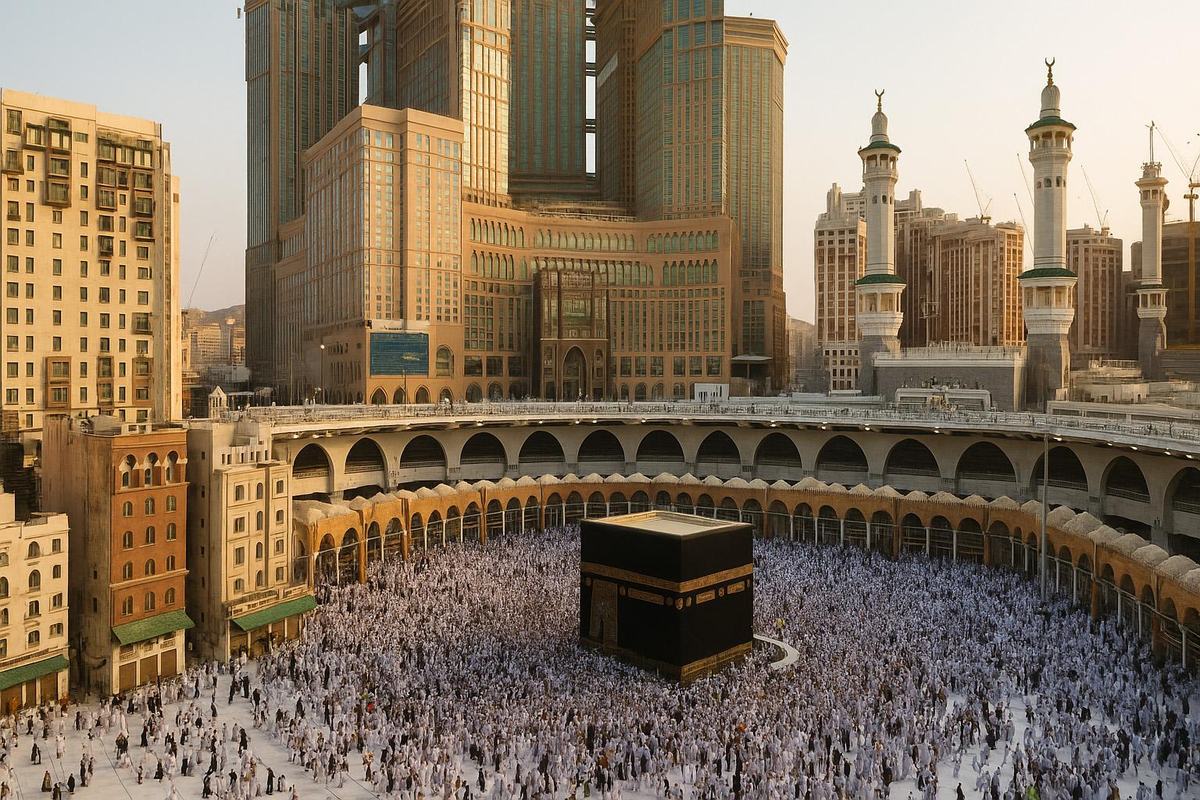
During the meeting "Endowment Sustainability and Savings Funds," organized by the Future Investment Company in Riyadh, I was struck by a smart comment from Mr. Abdulaziz Borahma – CEO of Fifth Corner Company – when he said: "We do not invest in hotels for the sake of the hotel, but for a journey that begins and ends with pilgrimage".
This made me recall one of the most challenging questions that weaken the maturity of endowment decisions: Is the endowment the building? Or the benefit it provides?
From Building to Meaning: Endowment as a Function
Many endowment institutions – especially in financially conservative environments – are automatically drawn to real estate investment as a "safe asset," as if safety means fixed returns, while what is missing from this equation is: the purpose of this asset.
In the experience of Fifth Corner Company, real estate was merely a tool to achieve three goals:
- Financing the cost of performing the pilgrimage and Umrah for the poor.
- Providing decent housing services for pilgrims through affordable savings packages.
- Achieving long-term financial sustainability through "halal" hotel investment.
Here, real estate was not an end showcased in reports, but a tool for social and investment empowerment simultaneously, achieving a religious, community, and financing purpose at once.
Ownership and Leasing Model: Questions Beyond Returns
During the meeting, several questions were raised by speakers and participants about the details of the ownership and leasing model, among the most prominent were:
- Who owns the hotel assets? The endowment? The company? Or an external investor?
- Is it better to lease the property and operate it by a third party? Or to own it and operate it independently?
- How can returns be distributed if local and international partners are involved in the capital?
- What is the stance of legal and regulatory authorities on investing returns in pilgrimage financing programs?
These questions do not pertain specifically to "real estate," but concern the vision behind the real estate, revealing that real estate endowment investment – if conducted without clarity in intention and function – may turn into a bureaucratic burden or unproductive asset inflation.
Between the Fifth Corner and “Tabung Haji”
When we compare this experience with its Malaysian counterpart "Tabung Haji," we find that both models use real estate as a tool, not a goal.
- “Tabung Haji” invests in agriculture, tourism, and construction, owning dozens of subsidiaries, but all this is in the service of the saving pilgrim.
- Fifth Corner Company invests in hotels as a means to provide accommodation for pilgrims at subsidized or fair prices, funded by savings or zakat funds.
The commonality between the two experiences is that real estate is managed according to the logic of "endowment life cycle," not "asset accumulation." The idea is not in the building, but in the impact it generates.
What Does the Saudi Endowment Sector Need to Overcome the "Worship of Real Estate"?
Many endowments in Saudi Arabia spend a significant proportion of their capital on acquiring land or buildings, only to be surprised after years that they lack liquidity, operation, and impactful investment.
What the endowment system needs is not to move away from real estate, but to liberate it from the illusion of financial sanctity, through:
- Transforming real estate into a productive asset linked to a community project.
- Treating real estate as a stage, not an end, in the investment cycle.
- Separating real estate management from endowment management through specialized entities in operation.
- Utilizing flexible arrangements such as long-term leasing, or sharing benefits, or ownership conditionally based on impact.
The Compass of Endowment is Not in Its Size.. But in Its Direction
When an endowment loses its direction, real estate becomes a silent idol. But when endowment entities regain their compass, real estate returns to its rightful place: a tool in the service of humanity, not a tool for administrative awe or reporting pride.
From Mecca to Islamabad, and from the experience of the Fifth Corner to the lessons of Asian funds, the same rule repeats: money does not build impact unless intention and purpose are built with it.
You can watch the complete meeting on the Future Investment Channel:

Comments (1)
No comments yet. Be the first to comment!