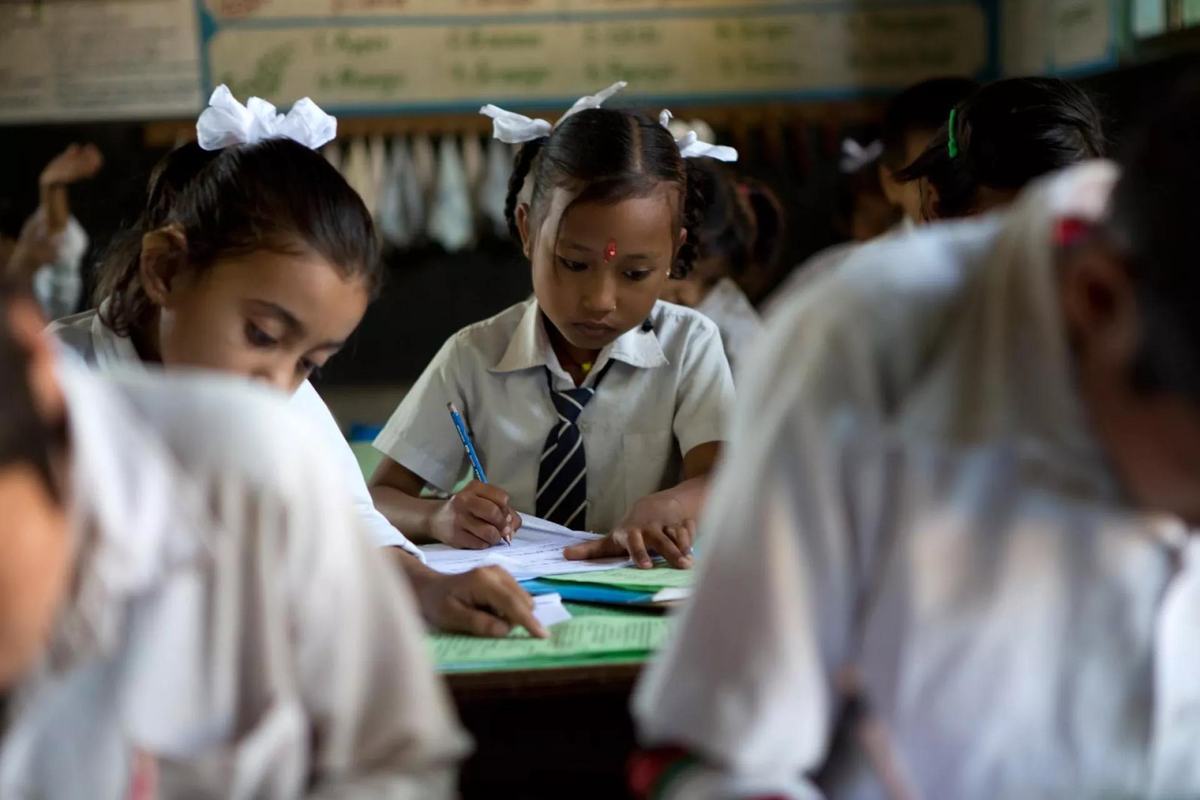

Quality education is one of the basic rights of every child, not only as a means to acquire literacy and numeracy skills but also as a space where the child's dignity is respected, and their humanity is celebrated, allowing them to learn in an environment free from fear, inclusive of all without discrimination.
Poor Education... Incomplete Learning
Experiences in South Asia – according to UNICEF – indicate that access to poor quality education often equates to the complete absence of education. While only one in three children in fourth grade can read a simple text, millions of children who have completed primary education lack basic skills in arithmetic and reading.
This data reveals a fundamental dilemma: it is not enough for a child to reach school; the learning environment must be genuinely equipped to foster real learning and developmental transformation in the child's life.
School Alone Is Not Enough
Improving the quality of education does not start from the classroom, but from home, the neighborhood, and the community. A child's home environment, access to educational materials, and teacher training directly affect their ability to learn and persist. Therefore, reducing dropout rates and ensuring a smooth transition from early childhood to primary and secondary education requires building an inclusive educational system that does not isolate classrooms from the realities of children.
Challenges in the Region... Lessons for the World
Countries in South Asia face severe challenges in funding education and providing educational competencies, and many of their educational practices still revolve around the teacher and rely on rote learning and corporal punishment, highlighting the need to change the approach, not only in content but in the philosophy of education itself.
In light of this reality, UNICEF's efforts present a practical model for addressing these challenges through:
- Developing national policies based on the principle of "child-friendly schools."
- Supporting teacher training and providing educational resources.
- Developing learning assessment systems to identify gaps and direct appropriate support.
- Encouraging the use of data in educational decision-making and improving classroom practices.
- Enhancing transparency and accountability in school operations.
- Supporting local planning and developing plans to improve school performance.
Towards Exemplary Education
UNICEF believes that sharing successful educational practices, along with data collection and analysis, are not merely technical tools but steps towards an educational system that serves all children fairly and enhances their ability to realize their potential.
In the Arab world, and particularly in the Kingdom of Saudi Arabia, such models can inspire national initiatives that elevate the value of quality education as a tool for individual and community empowerment and connect developmental aspirations to every child's right to find themselves in the classroom, not on the margins.
https://www.unicef.org/rosa/what-we-do/quality-education
UNICEF South Asia – Quality Education
Source:

Comments (2)
No comments yet. Be the first to comment!