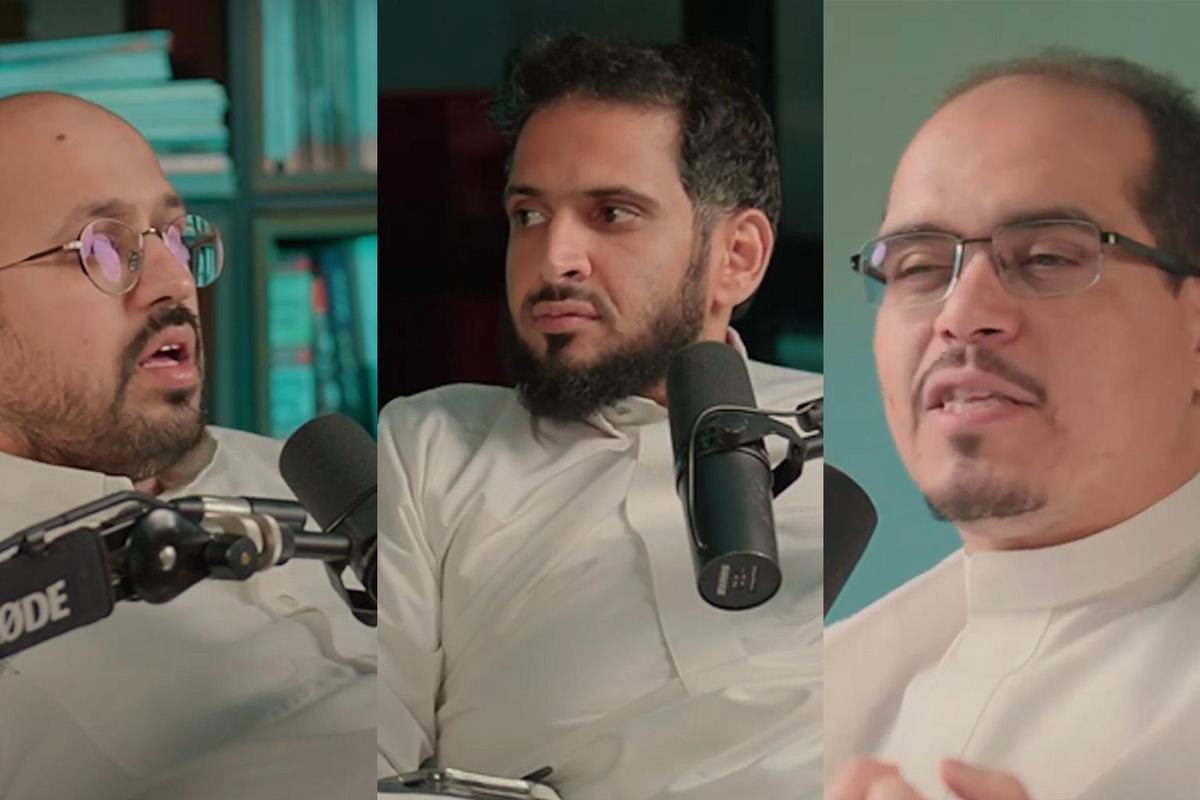

About the podcast and the message of dialogue
The Tale of the Sector program is not just an audio space to discuss the concerns and aspirations of the non-profit sector in Saudi Arabia, but it is a platform for collective thinking led by three different voices: Hilal Al-Qurashi with his media and developmental background, Hamid Al-Thiyabi with his experience in sustainability and governance, and Mohammed Al-Mutairi with his deep readings in identity and communication. The program is based on the idea that open discussion, even if it seems spontaneous or incomplete, is a crucial entry point to dissect the major issues facing associations and non-profit institutions in a phase of rapid national transformations.
National Day as a mirror of the intellectual crisis
Through the discussion, it became clear that the problem is not the absence of occasions, but rather the absence of vision. Most organizations – as the speakers suggest – treat National Day as a "protocol obligation" rather than a strategic opportunity. A repetitive post, a colorful slogan, and perhaps a hashtag that loses its impact once the day is over. The result: a weak presence that leaves no mark on the community's awareness nor on the organization's budget.
The seventh episode revolved around a fundamental question: How do Saudi civic organizations invest in national occasions, especially National Day, to enhance their image and develop their resources?
Critique of reality: Between performance and absence
The presenters agreed that what the sector is experiencing is a crisis of thought before it is a financial crisis.
- Hilal Al-Qurashi provided a comparative reading between how organizations reacted to historical moments such as the Kingdom's victory in hosting the Expo or the World Cup, concluding that the participation was mostly formal and random, lacking initiatives with a strategic dimension.
- Mohammed Al-Mutairi focused on corporate identity, emphasizing that most organizations lack a clear strategic brand, and what is being presented does not exceed scattered ideas from enthusiastic employees.
- Hamid Al-Thiyabi made a significant observation when he pointed out that the lack of investment in media and public relations stems from a mentality that sees communication as a "luxury", not a fundamental lever for impact and trust-building.
This variance in perspectives reflects the program's strength: it does not settle for a single narrative but opens the door for debate that reveals flaws from multiple angles.
The gap between large and small organizations
One notable point discussed in the dialogue was the disproportion between some institutions' size and their media presence. How can it be – as noted by Hamid – that organizations established for thirty or forty years, with budgets in the billions of riyals, only settle for a symbolic image or a brief post on National Day? Meanwhile, smaller or medium organizations – like Zamzam or Zahra – show greater creativity, utilizing national symbols and numbers (like 95 operations on National Day number 95) to turn the occasion into an impactful campaign.
The absent dimension: documentation and trust
What Hilal raised about the lack of systematic documentation opens a deep wound. Organizations serving hundreds of thousands of beneficiaries do not possess documented stories that highlight their impact. This vacuum makes the sector fragile against any rumor or negative criticism and leads to a loss of donor trust. The human story is not just a marketing tool, but a guarantee against reputation erosion.
Between caution and boldness
The discussion also touched upon the fear of organizations to adopt creative ideas or engage with global initiatives, fearing objections from some donors or potential religious or social backlash. Here, a clear disparity emerged:
- Mohammed perceived that this apprehension turns into "institutional cowardice" that stifles renewal.
- While Hilal considered that realism sometimes requires adaptation to the mentality of donors, even at the cost of some "ambitious" ideas.
- Hamid offered a middle-ground approach: there is no need to exaggerate costs or "outlandish" ideas, but there must be smart investment in core national and religious values that are universally accepted.
Missed opportunities and possible pathways
The episode did not just diagnose the problems but also presented practical examples:
- Investing in symbolic numbers: Linking the number 95 to specific support campaigns.
- Benefiting from global days: Such as "Giving Tuesday" or "Movember", and how these initiatives turned into billions of dollars globally.
- Enhancing integration among organizations: Instead of repeating efforts and spending amounts on producing mediocre content, resources and expertise can be shared.
Critical evaluation of the episode itself
Despite the richness of the discussion, the episode suffered – as previous episodes did – from analytical dispersion. The dialogue jumped between visual identity, the crisis of trust, the role of the national center, the experience of influencers, and even women's issues, without building a coherent analytical thread that linked them all together. Also notably absent from the discussion was any international comparative framework that clarifies Saudi Arabia's position in leveraging national occasions compared to organizations in other countries.
Between slogans and reality
This episode reveals that Saudi organizations do not suffer from a lack of occasions or scarce resources, but rather from a lack of strategic thinking in investing in major national moments. National Day is not just a passing slogan but a golden opportunity to showcase impact, renew trust, and attract support. If organizations continue to treat it as a protocol obligation, they will remain prisoners of a weak presence while commercial companies rush to secure their place in the community's awareness.

Comments (3)
No comments yet. Be the first to comment!