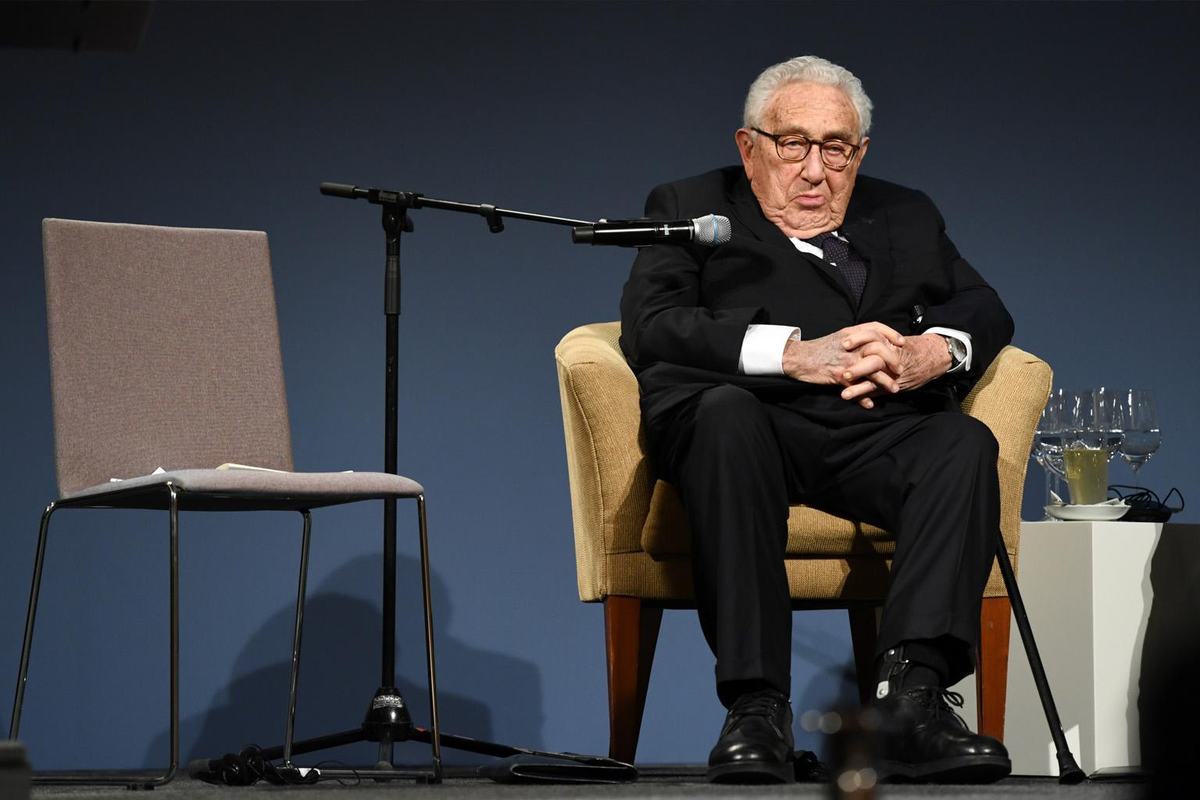

The name Henry Kissinger (1923–2023) is rarely invoked in discussions related to the nonprofit sector, as he is often classified within the field of international relations and realist politics. However, a careful examination of some of his works reveals a mindset that can be utilized in managing charitable institutions, especially in environments characterized by rapid change and complex relationships among influential parties.
This article discusses four of Kissinger's works as analytical references: Diplomacy (1994), On China (2011), The World Order (2014), and Leadership (2022). Instead of an impressionistic reading, the article adopts an applied analytical approach aimed at producing conceptual tools that can be activated within the structure of nonprofit work.
Firstly: Negotiation as a Reshaping of Influence
Reference: Henry Kissinger, Diplomacy (1994)
Kissinger views negotiation not merely as a means to resolve conflicts but as a strategic tool to reshape reality and impose a new balance. This perspective redefines the concept of "negotiations" in the charitable context to include managing relationships with donors, policymakers, and local communities.
Proposed Application:
In the nonprofit sector, we need to develop our negotiation skills through:
- Training our teams to understand conflicting interests.
- Building negotiable alternatives.
- Timing our initiatives appropriately.
Case Study:
A local nonprofit negotiated with a donor for sustainable strategic support and presented a mapped analysis of the social landscape and impact measurement tools related to social return on investment, not merely emotional narratives.
Secondly: Culture as a Precondition for Intervention
Reference: Henry Kissinger, On China (2011)
Kissinger clarifies in his analysis of the Chinese experience that effective political interaction requires a deep understanding of the cultural structure—especially in light of the intellectual and cultural transformation we are experiencing in the Kingdom today. This analysis applies to nonprofit institutions operating within changing communities, where it is not possible to transfer standard programs without understanding prevailing social norms.
Proposed Application:
- Analyzing local culture before designing initiatives.
- Reframing the nonprofit discourse to align with community language.
- Avoiding the borrowing of Western models without critique or scrutiny.
Case Study:
A nonprofit psychological association noted the community's rejection of traditional therapeutic terms, so it replaced them with more acceptable terms such as "psychological calm," which significantly increased public engagement.
Thirdly: Legitimacy as a Framework for Sustainable Work
Reference: Henry Kissinger, The World Order (2014)
Kissinger introduces the concept of "political legitimacy" as one of the pillars of building the world order, meaning the system's ability to be understood and accepted by those involved in it. This concept can be applied to nonprofit organizations, which must not only legalize their existence but also build legitimacy based on community trust.
Proposed Application:
- Increasing levels of financial transparency.
- Enhancing decision-making governance.
- Producing a narrative that explains the rationale for community intervention in acceptable language.
Case Study:
Monitoring and analysis showed that organizations that publish clear periodic reports on their financial and social impact have a greater ability to attract quality partnerships from the public sector.
Fourthly: Leadership as a Historical Sense
Reference: Henry Kissinger, Leadership (2022)
In his study of global leaders such as Lee Kuan Yew, Margaret Thatcher, and Nixon, Kissinger emphasizes that a leader is not only measured by their executive capabilities but by their ability to perceive the "historical moment" and formulate strategic responses to it.
Proposed Application:
- Building leader preparation programs that enhance contextual understanding instead of merely focusing on skills.
- Developing a sense of initiative and collective responsibility within the organization.
- Allowing local leaders a wider margin in building solutions.
Case Study:
A Gulf charity rose to a regional level after adopting a communicative leadership vision, which included expanding alliances and adopting a new knowledge discourse aimed at decision-makers, not just beneficiaries.
Finally
In a world where power intermingles with society, and legitimacy with impact, understanding tools such as negotiation, cultural analysis, seeking social acceptance, and developing conscious leadership... becomes a necessity, not a luxury.
Reading Henry Kissinger's books is not a recommendation for a ready-made model, but a call to adopt a critical approach in strategic thinking within the nonprofit sector.
The nonprofit sector in the Kingdom and the region is at a pivotal moment, where expectations are rising and performance standards are shifting. Hence, there is an urgent need to broaden reading horizons beyond the field and import applicable conceptual tools, even from the coldest realist minds.

Comments (2)
No comments yet. Be the first to comment!