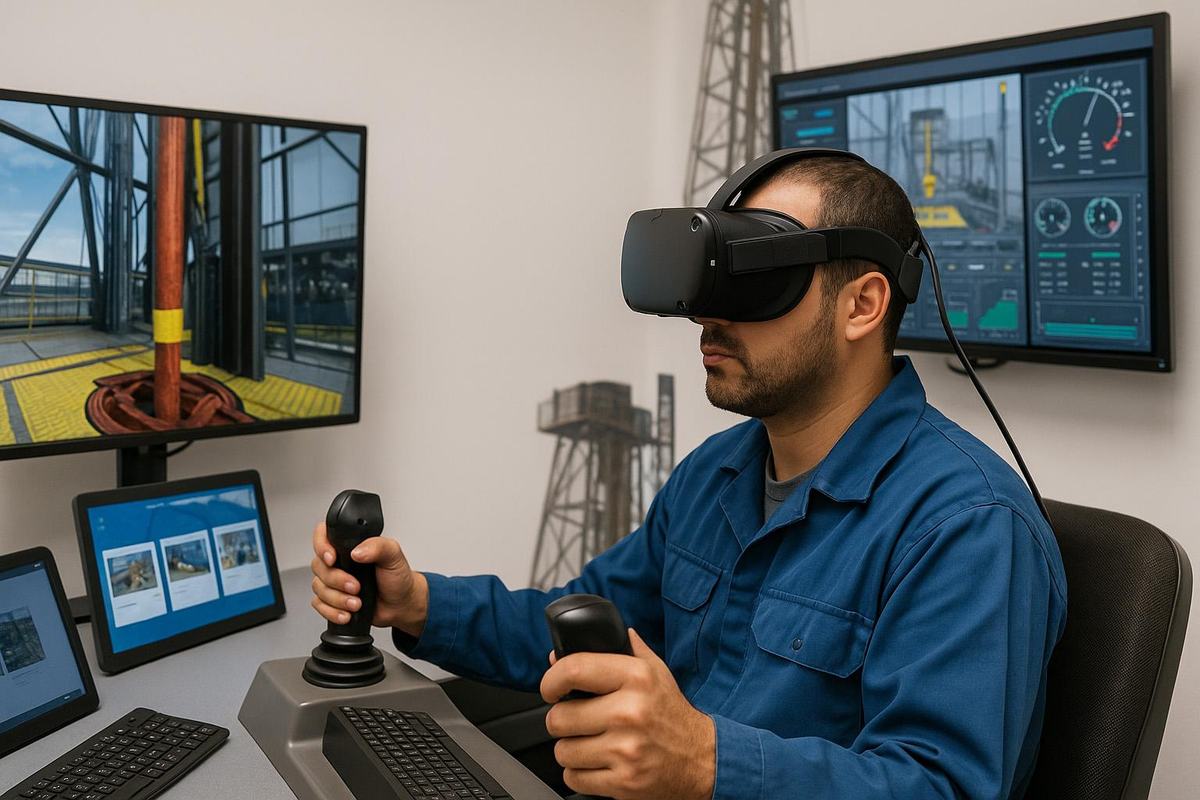

The Digital Infrastructure for Training Programs:
During the discussions of the second session of the Non-Profit Sector Forum in Education and Training, a fundamental question was raised:
"What makes the Drilling Academy radically different from traditional training centers?"
The answer was concise: complete digitization.
Since 2019, the academy has eliminated printed books and fully relied on a digital infrastructure that starts with a tablet and extends to virtual reality laboratories and massive simulators that mimic real drilling platforms.
However, the technology here was not a visual luxury, but a crucial tool that reduced costs, improved quality, and increased occupational safety to the highest levels.
Building a Digital Structure for Industrial Training was not just a technical task, but a strategic decision that required redefining all elements of the educational process:
Component | Traditional Form | Digital Transformation
Content | Books and Notes | Comprehensive Interactive Application
Laboratory | Physical Equipment | Virtual Reality Environments
Assessment | Paper Tests | Real-Time Performance Tracking Systems
Educational Environment | Classrooms | Mobile Smart Classes
Safety | Early Field Exposure | Safe Risk Simulation
The result? A 45% reduction in training costs over three years, and a reduction of training accidents to “zero” since the adoption of the digital curriculum, as presented at the forum.
What has been achieved at the Drilling Academy represents a reference structure for any non-profit training entity seeking to amplify its impact at the lowest possible cost.
Key Lessons Learned That Can Be Generalized:
Start with the Simple: The Tablet
Transforming curricula into interactive digital content through educational applications allows for continuous updates and reduces the need for printed copies and training kits.
Invest in the Laboratory Before the Field
Virtual reality and simulation reduce the cost of mistakes and shorten learning time by up to 30%.
Link the System to a Single Measurement Platform
The LMS digital learning system provides a unified dashboard that tracks each trainee's performance in real time.
Turn Safety into a Digital Value
In every simulation, dangerous behaviors are recorded, and trainees are taught how to avoid them, without human or material losses.
What Can Non-Profit Organizations Involved in Training Do to Adopt a Similar Digital Structure?
Proposed Roadmap:
Phase | Step | Advantage
Foundation | Transform Content into Digital – Applications – Video | Prepared for Flexible Presentation
Expansion | Equip Virtual Reality Laboratories and Simulation | Reduce Learning Time and Risks
Integration | Link Performance to an Educational AI Platform | Customize Training and Increase Impact
Sustainability | Update Content Periodically + Link to Employment Records | Continuous Governance and Evaluation
And Remember:
The Drilling Academy's journey towards digitization was not a luxury, but a choice imposed by the desire to build real human capital with the highest efficiency and lowest losses.
When the non-profit sector is able to establish a similar digital structure, it will not only contribute to increasing employment for individuals but also to reducing structural costs and enhancing safety standards in the most hazardous sectors.

Comments (3)
No comments yet. Be the first to comment!