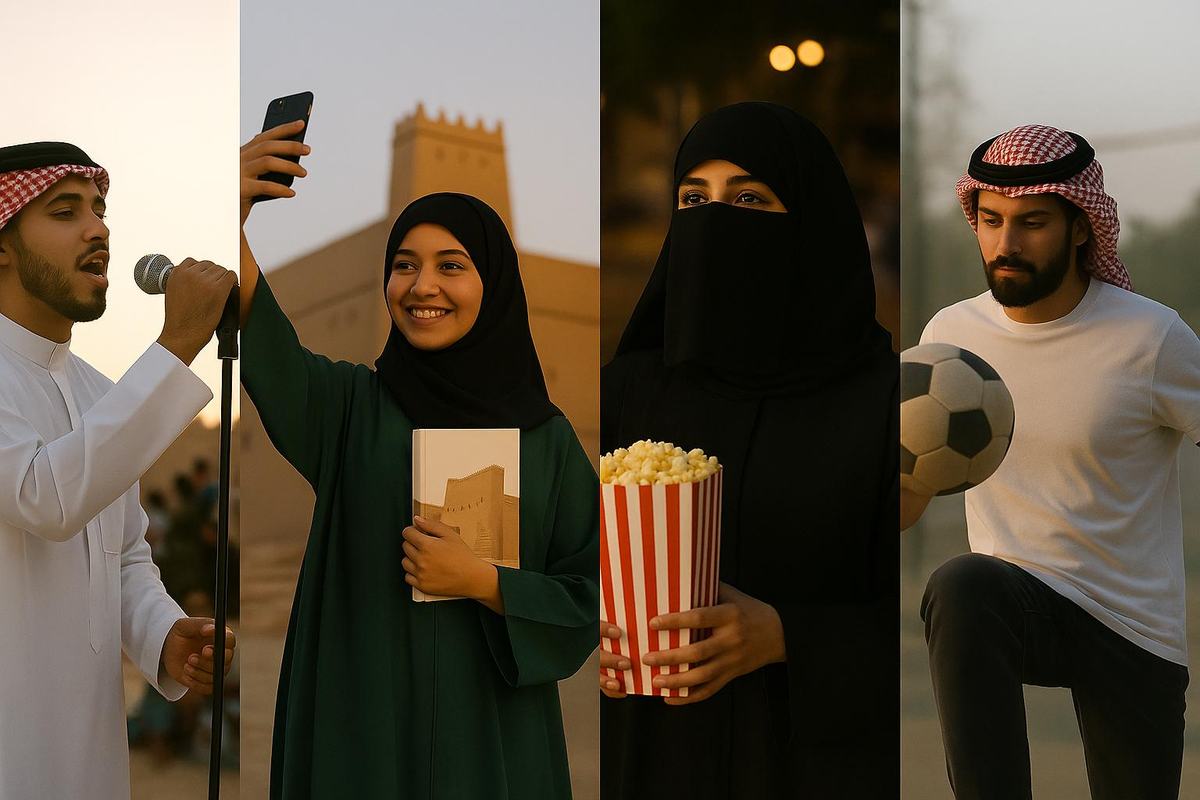

The workshop was held under the generous sponsorship of the Mother of Badr bin Saleh Al-Rajhi and her sons, and Ghaith, on Saturday, May 31, 2025, at the Executives Hotel in Riyadh.
From this perspective, the workshop organized by the International Center for Research and Studies "Midad" under the management of Dr. Khaled Al-Surayhi, titled: "Activating the Role of the Non-Profit Sector in the Fields of Culture, Tourism, Entertainment, and Sports", served as a methodological platform to frame the future role of the sector in these vital areas.
The non-profit sector in the Kingdom of Saudi Arabia is witnessing a qualitative transformation within the goals of Vision 2030, as it is no longer restricted to its traditional service roles, but is called to expand into areas that have a greater impact on shaping national awareness and enhancing quality of life.
The workshop relied on a wide-ranging field study that included analyzing data from 183 associations and reviewing more than 46 existing or proposed initiatives, in addition to deriving 22 executive recommendations. The results indicated that the biggest challenge does not lie in the absence of opportunities, but rather in the weak strategic interaction with them.
In the field of culture, the study revealed the novelty of establishment and the weakness of institutionalization, as more than half of the cultural associations were established in the last three years without a clear strategic direction.
As for tourism, despite the available institutional support, the percentage of associations actively engaged in this field did not exceed 5%, reflecting a gap in investing potential.
In the entertainment sector, there was a timid presence of institutional initiatives, despite the growing need for entertainment content that carries a moral and social dimension.
The workshop also revealed the limited contribution of associations in the sports field, as their participation in events did not exceed 8%, with a clear lack of non-profit sports club models that contribute to community development.
The workshop highlighted the importance of shifting from the seasonal charitable model to the institutional developmental model, through governance tools, specialization, and building trilateral partnerships among associations, government entities, and funders. What was presented in this workshop is considered a foundational framework for a public policy document that defines the future role of the non-profit sector beyond its traditional spaces, leading to a more influential position in the national scene.
Culture as a Strategic Lever: A Reading of the Reality of the Non-Profit Sector
In light of the profound transformations taking place in the Kingdom, culture has become more than just an artistic or heritage umbrella; it has become a strategic axis in building social capital and enhancing the Kingdom's international standing. Saudi Vision 2030 has given this field special attention through the National Cultural Strategy, which defines culture as a “way of life,” and is based on five main dimensions including enhancing national identity, improving quality of life, economic contribution, international openness, and developing a sustainable cultural sector.
But what is the position of the non-profit sector within this framework? Can it transform from just a mediating or charitable entity to an influential cultural actor?
Diagnosing Reality: A Modern Structure, Without Strategic Depth
The results of the field study accompanying the workshop indicate that 64.1% of cultural associations operating were established in the last three years, reflecting the novelty of the experience and its institutional fragility. More than 75% of these associations are geographically concentrated in only three regions (Riyadh, Eastern Province, Makkah), raising questions about cultural equity and the balanced distribution of roles.
At the issue level, the activities of associations are predominantly heritage-oriented (46.2%) and awareness-raising (35.9%), while percentages significantly decline in vital fields such as “visual arts,” “cultural exchange,” “training of cadres,” and “Arabic language,” all of which are central themes in global cultural classification.
The Gap Between Ambition and Executive Policies
Despite the clear vision of the Ministry of Culture and its diverse initiatives, the study reveals a lack of institutional linkage between cultural associations and the relevant authorities, with ambiguity in roles and weak utilization of enablers. Only 11 associations from the studied sample (out of 39) deal with empowerment as a genuine administrative concept, through qualification programs or partnerships with both the public and private sectors.
This reality makes “building specialized non-profit cultural entities” a priority that cannot be postponed, necessitating a shift from seasonal initiatives to stable structures with accumulated impact.
Opportunities Yet to Be Captured
Data analysis reveals a significant gap in adopting modern tools within the non-profit cultural sector, such as digital applications, content platforms, translation, scientific publishing, and public engagement. These areas are among the most growth-capable in cultural sectors, and among the least costly in investment compared to societal returns.
The workshop introduced prototype initiatives that are scalable, such as:
- Establishing endowment funds for cultural activities.
- Creating community cultural centers with a multifunctional concept.
- Launching national competitions for folk arts, poetry, and theatrical criticism.
- Simplifying licensing and formalizing partnerships with supporting entities.
Institutional Recommendations: From Associations to Strategic Structures
To overcome this reality, the workshop recommends – based on the study – several strategic pathways, notably:
- Utilizing the central unit "Cultural Incubator" launched on May 28, 2025, to coordinate and integrate between cultural-focused charitable associations and the Ministry of Culture.
- Incorporating cultural associations into the value chains of national cultural programs.
- Developing performance indicators that go beyond the number of events to measure behavioral and cognitive impact.
- Supporting associations that adopt digital transformation and scientific documentation.
- Providing indirect investment incentives for sustainable cultural entities.
Towards a Sovereign Cultural Role for the Non-Profit Sector
What the workshop demonstrated is not only a declining reality but also an unrealized potential. If culture is part of the state’s soft power, then the non-profit sector has a central role in solidifying it, provided it revisits its structure, mission, and operational models.
It is high time that “cultural work” in the non-profit sector is read not as an addition, but as an existential necessity in building the Saudi human, and deserving of leading the Arab cultural scene.
Towards an Effective Non-Profit Sports Sector: Missing Opportunities and Untapped Potential
Sports in the Kingdom of Saudi Arabia is one of the national tools to achieve the goals of Vision 2030 regarding quality of life, community development, and social investment. However, the national workshop "Activating the Role of the Non-Profit Sector in the Fields of Culture, Tourism, Entertainment, and Sports" revealed a fundamental flaw in the institutional presence of the non-profit sector in the sports field, despite the maturity of government directions and the clarity of strategic frameworks.
Establishment Gap and Limited Expansion
The accompanying study to the workshop indicated that 60% of registered sports associations were established in the last three years, signaling the novelty of the formation and the lack of solid experience. Furthermore, the distribution of associations is still concentrated in merely three regions, while other regions suffer from weak institutional presence, negatively impacting sports equity and balanced development.
Diagnosing Practices: Dominance of Popular Activities and Weak Specialization
The study's data indicates that most non-profit associations operating in the sports field engage in traditional paths such as health promotion (33.3%) and general community organization activities, while percentages significantly decline in more specialized and sustainable issues like

Comments (4)
No comments yet. Be the first to comment!