
During my recent visit to Moscow, I stood long before some rich educational experiences that not only amaze the visitor but also push them to deeply consider the role of the environment in raising a child. These experiences were not projects executed for aesthetic or promotional purposes, but rather reflections of community awareness that elevates the value of childhood, giving it priority in public policies.
The Central Children's Library: Where Reading Becomes an Adventure
I visited the Government Central Children's Library, a cultural institution that has been established for more than half a century, and is considered one of the largest libraries specializing in childhood in Russia. What captivated me was how “reading” transformed from a solitary static act into a lively interactive experience. The library does not rely solely on shelves and books, but rather dedicates storytelling corners, organizes artistic performances, and prepares spaces for free reading and discovery, taking into account the child's developmental stages and interests. Here, the book is not imposed on the child; it is presented to them in a way that respects their curiosity and invites dialogue.
The Children's Museum: From Receiver to Explorer
In the Children's Museum, I found a rare educational environment where knowledge is presented not through dictation, but through interaction, play, and experimentation. Every corner is designed to encourage the child to think and provides them the opportunity to be an active participant in the educational process. The child here does not receive information but creates it, practically training in critical thinking, research, and deduction skills. This is an education that does not believe in memorization but in discovery.
Public Parks... But for Children
In the famous “Gorky” Park, I noticed how the spaces designated for children are not just playgrounds, but carefully planned areas that cater to their movement and social needs, encouraging open play and family interaction. It was a silent call to enhance the mental and physical health of the child, making the family part of the educational process, not just a spectator.
“Matryoshka”: When the Toy Tells the Story of the Family
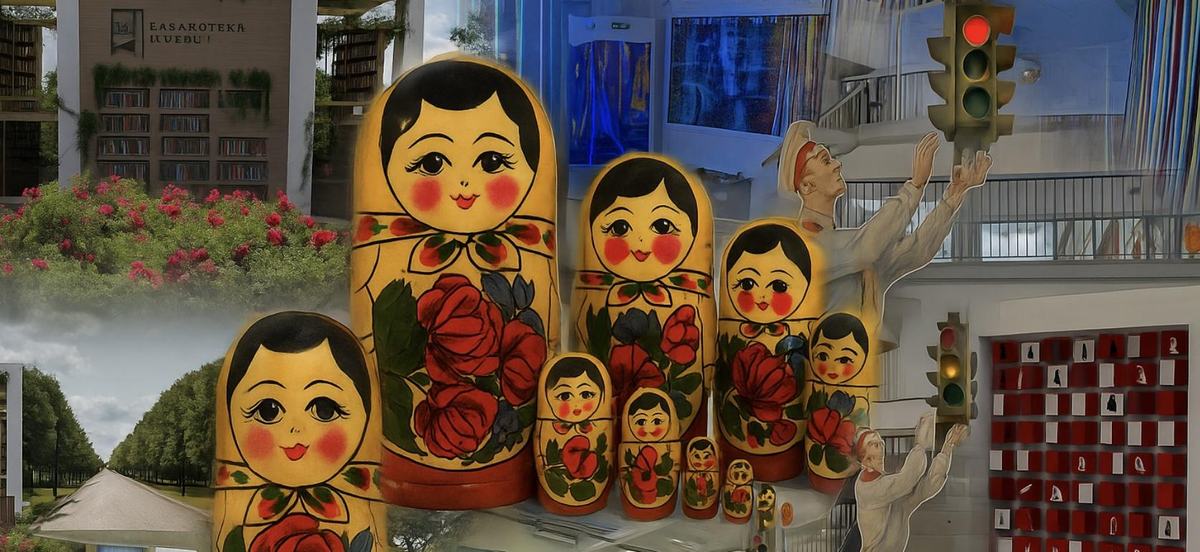
I was amazed by the Russian “Matryoshka” doll, those nested wooden dolls that creatively embody the image of family. Each doll reveals another, just as it unveils the values passed down through generations. They are not just toys, but a symbolic narrative that enhances the concept of family belonging, and the communication between the child and their parents through shared play, storytelling, and the creation of collective memory.
Nature as an Educational Curriculum
In the “Tsaritsyno” area, I visited what is known as the “Children's Garden,” where children learn about agriculture and interact with nature in an open environment. There is also the “Children's Center in Moscow,” which combines motion, play, and social interaction in a design that considers the child's cognitive and physical skills. Everything here is well thought out, and childhood is not marginalized but rather central.
What Can We Learn?
These models embody how informal environments can transform into effective educational spaces that shape the child's personality, develop their abilities, and prepare them to be active individuals in their community. At its core, it is a call for us to rethink childhood spaces in our Arab world, especially in light of Saudi Arabia's Vision 2030, which has given special importance to aspects of quality of life, empowering childhood, and lifelong education.
When we elevate the value of play, reading, and discovery, we build the person before we build the system.
By: Dr. Hammam Al-Harithi
Executive Director
Center for Childhood Solutions

Comments (2)
No comments yet. Be the first to comment!