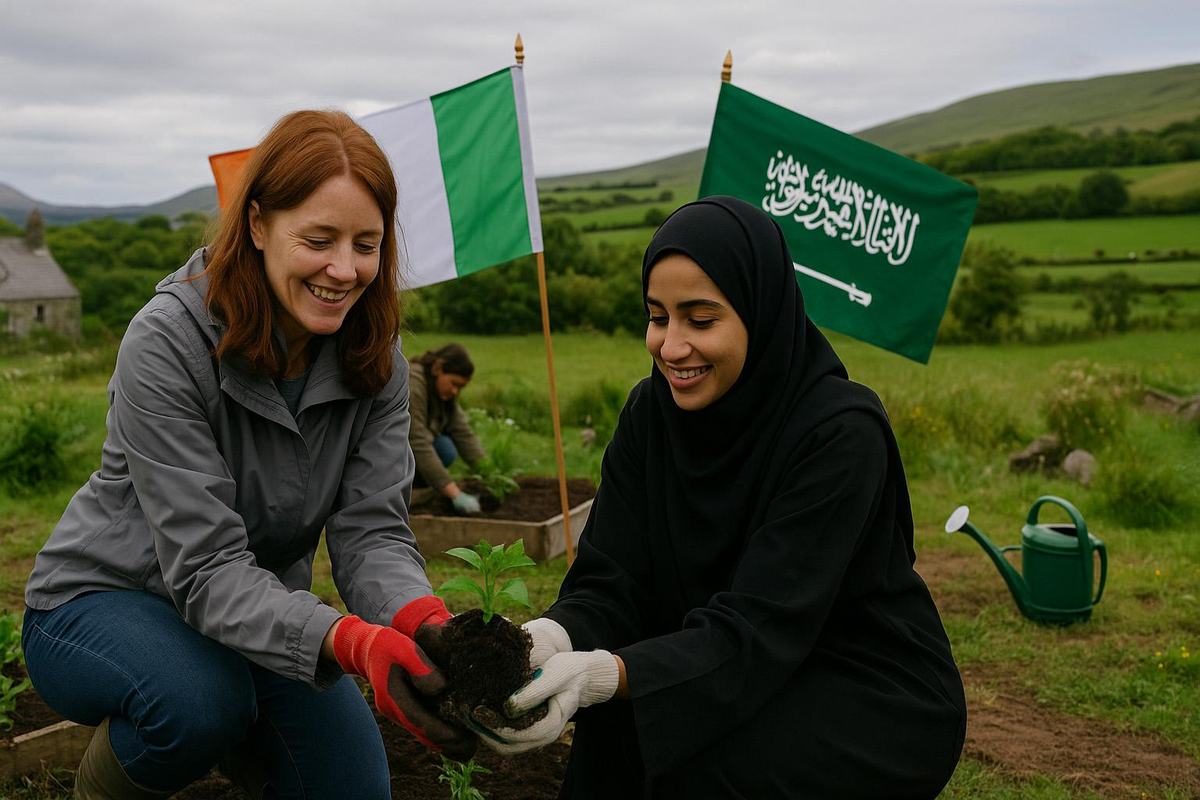

In the context of the role of the "third bank" in monitoring global experiences and providing a knowledge reading that contributes to the development of the Saudi non-profit sector, this article comes as an analytical translation of the key points in the report of The Wheel regarding Ireland's budget for 2025, with a local alignment that draws on the Irish experience for what can be applied in the Kingdom.
The report outlines a series of supportive measures for the community and voluntary sector, including clear financial increases such as: 1.6 million euros to support community development, volunteering, and charitable work, enhancing the Community Centre Fund, expanding the donations program, and improving the efficiency of regulatory bodies.
The budget also included direct support to address social isolation, with an increase of 2.5 million euros for the SICAP program, and the allocation of 12.8 million euros to improve well-being data, along with support for refugee integration and social housing. However, the absence of comprehensive policies to combat loneliness and ongoing disparities in salaries of sector employees remain notable challenges.
The organization also welcomed the increase in funding for youth, mental health, and childcare programs, expanding support for digital skills and artificial intelligence, in addition to raising some social security allocations and providing a cash grant for every newborn. Nevertheless, the need remains to link assistance to actual living costs, close wage gaps, and engage communities in sustainability efforts.
The report concludes that sustainable investment in this sector is not a luxury, but a national necessity for building resilient, just, and inclusive communities.
This international experience highlights real opportunities that the Saudi non-profit sector can benefit from, especially in light of what Vision 2030 offers in terms of growth, partnership, and reshaping the social role of non-profit institutions.
The 2025 budget, announced on Tuesday, October 1, included a series of measures demanded by the members of The Wheel, as noted in the organization's memorandum submitted before the budget titled "The Future is Community".
However, there is still much to be done to support sector organizations and the people they serve.
1. Supporting the sector to achieve impact
The 2025 budget introduced a number of initiatives to support the community and voluntary sector. These initiatives include:
- Allocating 1.6 million euros to support the community and voluntary sector aimed at enhancing the implementation of community development programs, volunteering, and charitable work.
- An increase of 1 million euros for the Community Centre Investment Fund.
- A 12% increase in funding for the Charities Regulator to improve regulatory infrastructure.
The Charitable Donations Scheme has also been expanded, meaning:
- Charities are no longer required to have been established for at least two years to benefit from the scheme.
- The timeframe allowed for using donations after receipt has been extended.
The budget also included a series of support for the small and medium enterprises (SMEs), notably:
- Raising the tax relief limit for entrepreneurs (Start-Up Relief for Entrepreneurs) from 700,000 euros to 980,000 euros, which is a significant boost for aspiring entrepreneurs.
However, despite these improvements, some important issues for members of the organization saw no progress, such as:
- No increase in the VAT Compensation Scheme.
- No commitment to developing a comprehensive strategy to ensure the long-term sustainability of the sector.
The Irish experience in supporting the community and voluntary sector through the 2025 budget reflects the importance of having a cohesive and sustainable financial strategy that considers the diverse needs and changing challenges of the sector. In the Saudi context, the role of the National Center for the Development of the Non-Profit Sector emerges as a pivotal entity to enhance these trends, by creating innovative funding mechanisms, expanding tax incentives, and supporting governance and specialization in charitable work.
As the number of NGOs increases and community expectations heighten, adopting similar policies – such as targeted tax exemptions or direct support for developing regulatory infrastructure – will contribute to enhancing the efficiency of associations, ensuring the sustainability of their impact, and strengthening their contribution to the goals of Saudi Vision 2030.
2. Combating social isolation
This funding will enhance efforts to reduce social isolation and strengthen community participation.
Social isolation is a growing concern, and the government has taken steps to address it through the increase of funding for the Social Inclusion and Community Activation Program (SICAP) by 2.5 million euros.
The Central Statistics Office also received an increase of 12.8 million euros to expand data collection on overall well-being, a step that will contribute to guiding future policy decisions.
However, despite this progress, there is still no dedicated fund to support social engagement (Social Engagement Fund), and there is no comprehensive action plan to combat loneliness, both of which continue to negatively impact the most vulnerable populations.
What is reflected in the Irish experience regarding funding social integration programs shows a growing global awareness of the impact of isolation on community cohesion and quality of life. In the Saudi context, the issue of social isolation appears particularly among the elderly, widows, persons with disabilities, and social security beneficiaries, as a vital area needing integrated interventions between government bodies and NGOs.
Despite the efforts made through community empowerment initiatives and activities provided by associations and community development committees, the Kingdom still needs an independent and sustainable funding mechanism similar to what the Irish experience proposed through a "Community Engagement Support Fund," aimed at funding neighbor visit programs, neighborhood meetings, and initiatives that enhance human interaction in both urban and rural environments.
Furthermore, the Saudi Statistics Authority's directive to expand data collection on welfare and social relationships – as Ireland did – could provide a knowledge base for decision-makers, assisting them in designing more targeted social policies, especially in light of the objectives of Vision 2030 related to improving quality of life and enabling the non-profit sector to play developmental roles.
Addressing isolation requires not only care programs but also a national culture that encourages meeting, solidarity, and belonging, which can only be achieved when "human togetherness" becomes a clear developmental goal, not just a side effect of services.
3. Building inclusive communities
The 2025 budget clearly focused on building inclusive communities, with the allocation of:
- 50 million euros for integration teams affiliated with local authorities (Local Authority Integration Teams – LAITs).
- 25 million euros additionally to the Community Recognition Fund.
These measures aim to support the integration of international protection applicants, including those coming from Ukraine, by enabling local communities to accommodate them and provide the necessary support.
The budget also included:
- Increased funding for the Tusla Agency (responsible for child and family services).
- Additional support for unaccompanied children, which is a step towards building more inclusive and just social structures.
However, despite these efforts, there is still an absence of any moves towards recognizing prior learning or conducting skill assessments for international protection applicants, which could hinder their full integration in the long term.
The Irish experience in funding community integration programs for international protection applicants reflects a global trend towards empowering individuals from diverse backgrounds to engage in the local social fabric, which is an experience that can inspire efforts in Saudi Arabia to build inclusive communities that promote diversity, solidarity, and coexistence.
In the Saudi context, opportunities to build inclusive communities manifest through:
- Programs for productive families and local communities led by NGOs with support from the Ministry of Human Resources and Social Development.
- Empowerment initiatives for internally displaced persons, residents of peripheral areas, and legal migrant workers.
- Support for orphans and unaccompanied children through institutions like the Ensan Association and the Ikha Association.
However, there is still a need to develop a national system similar to "Community Integration Teams" (as in Ireland), working to:
- Enhance community participation for underrepresented groups.
- Provide linguistic, professional, and knowledge support for relocated or returning groups (such as those returning from conflict zones or families displaced due to economic or social circumstances).
- Link non-formal education to employment through recognition of prior experiences and skills acquired outside formal systems, a step that has yet to be activated at the local level.
Building an inclusive community in Saudi Arabia does not just involve granting services but includes redesigning social integration mechanisms in accordance with Islamic and human values that honor the individual and recognize his diversity, by tying this to the national transformation towards empowering the non-profit sector as a key player in development and solidarity.
4. Strengthening civil society
The 2025 budget provided additional funding for Public Participation Networks, existing in each of the 31 areas under local authorities across the country.
The budget also included:
- Increased funding for the Shared Island Unit of the Office of the Taoiseach.
- An increase of 1.6 million euros for the PEACE program, which focuses on supporting peace and social cohesion.
All these measures align with the priorities of the members of The Wheel within their recommendations for the 2025 budget.
The Irish experience in funding community participation networks and programs supporting social cohesion serves as a model that can be leveraged in the Saudi context, where the non-profit sector in the Kingdom is undergoing a strategic transformation led by the National Center for the Development of the Non-Profit Sector, aiming to increase its contribution to GDP to 5% by 2030.
Alignment in Saudi Arabia is reflected in:
- Enhancing the role of community association councils in the regions to serve as coordinating platforms that resemble the community participation networks in Ireland, granting them tools to influence local decision-making.
- Supporting programs that enhance national cohesion and community peace, such as initiatives aimed at youth in border areas or interfaith and inter-cultural dialogue programs, implemented by institutions like "Peace for Cultural Communication" and the "Dialogue National Center".
- Investing in specialized volunteering initiatives and local solidarity through platforms like the "National Volunteerism Platform," which reconnects citizens to the community through active roles.
What Ireland recognized about the importance of supporting civil society through replicable coordinated and financial tools is precisely what Saudi Arabia seeks to establish through a non-profit empowerment system that aligns with the ambitious vision of a vibrant society, a flourishing economy, and an aspirational nation.
5. Lifting people out of poverty
Additionally, one-off cash payments will be distributed in late 2024 and early 2025 to the beneficiaries of:
The basic social security payments will see an increase of 12 euros per week.
- Fuel Allowance
- Living Alone Allowance
- Carer’s Support Grant
- Various other types of social security payments.
A new 450 euro grant for each child born starting from December 2024 was also announced, aimed at alleviating financial burdens on new parents.
However, the failure to restore cut funding for public services in the community and voluntary sector leaves critical gaps in the social support network.
Nonetheless, the demands for linking social security payments to actual living costs have not been addressed.
In the Irish experience, an increase in weekly social security payments and the provision of cash grants for the most needy were adopted as attempts to mitigate poverty and the pressures of living. While this direction is crucial, the report highlighted that financial support alone is not sufficient without a comprehensive strategy that ensures equity and sustainability.
In the Saudi context, there is a deeper rooting of the concept of solidarity within the Islamic perspective, where poverty is not merely seen as income deficiency, but as a social condition requiring the activation of the systems of "nafaqa", "zakat", "waqf", and "sadaqa jariyah", through integration between the individual, the state, and civil institutions. The Messenger of Allah, peace be upon him, said:
"He who goes to bed full while his neighbor is hungry and he knows it, is not one of us."
Here lies a qualitative opportunity for non-profit institutions in the Kingdom, represented in shifting from merely providing assistance to empowering the needy, through:
- Professional training and qualification programs for the beneficiary families.
- Funding small projects through developmental endowments.
- Building smart databases of multidimensional poverty linked to zakat and welfare platforms.
"So it does not become a state among you for the wealthy."
Poverty in a Muslim society is not a fate to bear, but a call for action, solidarity, and investment in human dignity. Success is not merely in the amount of spending but in building a system that respects values, sustains impact, and realizes the lawful purpose:
In light of Saudi Vision 2030, the integration of modern policies with foundational principles is the way to establish a safety net that not only protects the poor but reintegrates them into the cycle of production and dignity.
6. Decent work and skill development in the sector
This funding will be directed to areas of strategic leadership, management, governance, finance, and communication, and will also include expanding research and partnerships in skill development.
The 2025 budget included an additional allocation of 800,000 euros for skill development within the sector.
The organization also welcomed:
- A 3 million euro increase for the Community Services Programme, to support community services that are locally managed and meet demand gaps.
- Investment in digital skills and artificial intelligence through the National Training Fund, which is considered a positive step towards modernizing the workforce in the sector.
However, despite these improvements, the budget failed to address the issue of pay equity faced by employees of non-profit organizations, who perform similar or identical work to their counterparts in the public sector.
Wage disparities, especially in the areas of disability, child and family services, addiction, and homelessness, remain unresolved issues.
The allocations included in Ireland's 2025 budget for skill development in the community and voluntary sector reflect an increasing recognition of the importance of investing in human capital as a critical element for the sustainability of the non-profit sector. This vision aligns with what the National Center for the Development of the Non-Profit Sector in Saudi Arabia has emphasized, that the transition from traditional charity to a sustainable institutional sector begins with qualifying human resources and developing specialized skills.
In this context, the Irish experience can be connected to several pioneering Saudi initiatives, such as:
- A partnership program with governmental entities to prepare leaders of the non-profit sector.
- The Ather platform initiative for measuring developmental impact, which requires precise professional skills in governance, finance, and institutional communication.
- The plan to develop non-profit professions as part of the outputs of the strategy to empower sector workers, which aims to align skills with the actual needs of organizations.
As the use of artificial intelligence and data analysis technologies expands, the biggest professional challenge lies in achieving a balance between qualifying competencies and building fair and motivating structures for employees, especially in fields dealing with the most vulnerable groups, such as persons with disabilities and children.
Therefore, the Irish experience in this area, despite its importance, shows the need to link skill development with fair wage policies, competitive incentive structures, and job security strategies. These are paths that the National Center in the Kingdom is working to promote, within the framework of developing a conducive and attractive environment to achieve the objectives of Vision 2030.
7. Building healthy communities
The 2025 budget allocated:
- An increase of 1.18 billion euros to ensure the continued provision of current service levels.
- 240 million euros additionally as capital spending for ICT projects and existing capital projects.
The budget also included:
- Funding for 160 community beds.
- Efforts to reduce waiting lists.
- Improved access to health emergency services.
The organization also welcomed:
- Increases in mental health funding.
- Support for social integration services, including community addiction treatment services.
However, the budget did not allocate explicit funding to implement obligations under the UN Convention on the Rights of Persons with Disabilities (UNCRPD).
Nonetheless, the budget did not meet the recommended investment levels within the Sláintecare program of 2016.
The Irish experience in Budget 2025 shows a growing interest in enhancing the community health infrastructure, through expanding service access, updating infrastructure, and increasing support for mental health and addiction. These steps intelligently intersect with what the Saudi Ministry of Health has adopted in its strategy for health transformation, under the umbrella of the new healthcare model.
In Saudi Arabia, healthcare is no longer restricted to hospitals but has shifted towards prevention, health promotion, and community empowerment, as seen in initiatives:
- Your Community Health, targeting neighborhoods with field health teams.
- The home healthcare program that offers specialized services for the elderly and persons with disabilities.
- Smoking cessation support centers and addiction recovery as part of comprehensive mental healthcare.
However, what the Irish experience highlights draws attention to a common challenge: the need to enhance investment in mental and social health and integrate it into the basic care system, not just as a supplement, but as an integral part of human health and quality of life.
In this context, the importance of developing multidisciplinary community health centers and integrating efforts between the Ministry of Health and non-profit health associations is highlighted, ensuring equitable and effective access to mental health, behavioral, and social treatment services.
Health in Saudi Arabia is no longer just about treatment, but part of a national project to enhance quality of life, where technology, prevention, and rehabilitation are integrated, enabling individuals and communities to become active partners in their health journey.
8. Providing housing for communities
The 2025 budget included a capital allocation of 3.2 billion euros for the housing sector, which includes:
- A commitment to build 10,000 new social housing units.
- Targeted support for approved housing bodies (AHBs) to enhance the provision of social housing.
The budget also included:
- A target to provide 3,000 affordable housing units or low-cost rental housing.
- Allocation of 23 million euros for housing specific to the traveller community (Traveller-specific accommodation).
- Adaptive grants of 100,000 euros to assist the elderly in adapting their homes.
In terms of homelessness, 61 million euros were allocated to support homelessness and measures to sustain renting. This funding aims to provide comprehensive support for individuals at risk of losing their homes through tenant protection programs and homelessness prevention, in partnership with sector organizations.
The Irish experience in Budget 2025 highlights the importance of investing in social housing as a tool to address housing gaps and ensure social justice, an approach that intersects with what the Ministry of Municipal and Rural Affairs and Housing in Saudi Arabia advocates through quality programs like "developmental housing" and "Sakani".
Despite governmental intentions to provide housing for those in need, the weak targets set and the failure to acknowledge past shortcomings in implementation will keep challenges alive in this field.
Nevertheless, the issue of poor implementation of social housing projects in previous years remains unresolved, without consideration in the 2025 targets.
In Saudi Arabia, housing is no longer merely a real estate product but a comprehensive developmental service concerned with enhancing quality of life and ensuring family stability for the most vulnerable groups. The most notable initiatives have included:
- Providing suitable housing for families benefiting from social security, in collaboration with non-profit organizations.
- Empowering NGOs to manage and operate developmental housing projects directly.
- Prioritizing housing support for widows, divorcees, the elderly, and persons with disabilities under clear and transparent criteria.
However, there remains a need to develop supportive policies similar to those seen in the Irish experience, such as:
- Preventive programs against homelessness that anticipate housing loss situations.
- Dedicated funding for adapting homes for the elderly and persons with disabilities.
- Enhancing partnerships with organizations specialized in housing and accommodation to ensure operational sustainability.
This is what Saudi Vision 2030 emphasizes by transforming housing from a "product" to a tool for stability, empowerment, and achieving social justice.
Building stable communities starts with secure housing and is complemented by development empowerment that integrates the family into its social and economic environment.
9. Engagement of children and youth
Building communities is a process that starts with investing in the next generation, and the 2025 budget included the following:
- An increase of 7 million euros in funding for youth work programs.
- Expanding initiatives for youth participation within the action plan "Engagement of Children and Youth in Decision-Making 2023–2028".
The investments also included:
- Expanding the National Childcare Scheme with an additional funding of 160.7 million euros.
- Additional funding to support extracurricular activities and out-of-school support services.
These investments aim to:
- Enhance the inclusion of children and youth in community life and decision-making.
- Make childcare services more accessible and affordable for families.
What the Irish Budget 2025 included in raising funding for youth work programs and expanding youth participation in decision-making aligns with what the Kingdom is witnessing in a qualitative transformation in the care and empowerment system for youth, where youth have become partners in development, not just beneficiaries, supported by the Ministry of Sports, the Youth Authority, the Misk Foundation, and the Quality of Life Program.
This Saudi vision is manifested through:
- The youth empowerment strategy aimed at preparing an active generation in the economy and society.
- Initiatives like the "Fatan" Program and "Leaders 2030" that develop leadership thinking and influence skills.
- The launch of regional youth councils, which represent an advanced Saudi model for youth engagement in developmental decision-making at the local level.
In the family and educational aspect, programs such as:
- Supporting working mothers and young mothers through the "Tamakun" center and initiatives of the non-profit sector.
- Funding extracurricular activities in collaboration with private schools and educational associations, contributing to building a balanced student personality.
The next phase needs to transition youth from being recipients to being initiators, participators, and influencers, by enhancing youth platforms, expanding practical training, and linking educational and economic policies with national empowerment pathways.
In Saudi Arabia, youth are not regarded as a "problem" to be dealt with, but as a significant national force that needs to be invested in with the spirit of the times, engaging them in shaping the future that befits the aspirations of a young nation.
10. Building sustainable communities
The 2025 budget included:
- Increases in grants from the Sustainable Energy Authority of Ireland (SEAI), aimed at updating residential and community buildings and improving their energy efficiency.
- Support from the EU Just Transition Fund, alongside funding for circular economy programs, reflecting Ireland's commitment to assisting communities in transitioning to sustainable living patterns and reducing carbon footprints.
However, the budget did not include any explicit mentions of co-design processes or collaboration with community groups, raising concerns about the extent of local community involvement in sustainability efforts.
Building sustainable communities requires not only funding but also true and active participation from the local community in shaping and implementing solutions.
The Irish experience in financing energy efficiency and circular economy initiatives reflects a global trend towards communities becoming more aware of their environmental impact and more ready to transition to sustainable living patterns. In Saudi Arabia, Vision 2030 represents the wider framework that translates this direction into practical pathways, where sustainability is no longer just an environmental goal but a core component of quality of life and community governance.
Programs such as:
- The National Energy Efficiency Program,
- and The National Environment Strategy,
and initiatives for low-emission circular economy,
all embody the Kingdom's commitment to achieving a comprehensive transition towards sustainability that integrates technology, society, and resources.
What distinguishes the Saudi approach is the emphasis that the citizen is a partner in this transformation, not merely a consumer of policies, as evidenced in:
- Encouraging smart cities and low-consumption local communities.
- Enabling environmental associations and grassroots initiatives through community funding programs.
- Enhancing participation in making environmental policies through municipal councils and volunteer initiatives.
While the Irish experience did not clearly activate the tools of "co-design," Vision 2030 is moving steadily towards achieving integration between the citizen, civil society, and executive bodies in shaping environmental solutions, establishing sustainability as a daily practice that starts from the neighborhood and builds from inside out.
Building a sustainable community in Saudi Arabia does not mean merely reducing emissions, but means achieving a lifestyle that respects both humanity and place, and in which everyone participates and reflects a modern and responsible national identity.
The Ireland 2025 budget reveals a clear trend towards supporting the community and voluntary sector as one of the pillars of sustainable development, through qualitative funding that encompasses housing, care, youth empowerment, skill development, and improving the regulatory infrastructure of the sector. Despite gaps that have yet to be addressed, particularly regarding wage equity and linking assistance to living costs, the Irish experience provides an important model for aligning financial policy with the needs of civil society.
In the Saudi context, this experience represents an opportunity to understand how funding policies can transform into real empowerment tools for the non-profit sector, contributing to enhancing community participation and building more just and cohesive communities. As the steps of Saudi Vision 2030 accelerate, it has become essential to develop governmental financing practices and community partnerships in a way that ensures sustainability, stimulates innovation, and redefines the role of society in driving development.
The real bet is not just on the volume of support but on the intelligence of its direction, the fairness of its distribution, and the effectiveness of its impact. This requires a flexible regulatory environment, sustainable investment in humans, and qualified and capable civic institutions to lead the change. Only in this way can we build a non-profit sector that befits the aspirations of a nation and serves as a true lever for a vision that shapes the future.

Comments (2)
No comments yet. Be the first to comment!