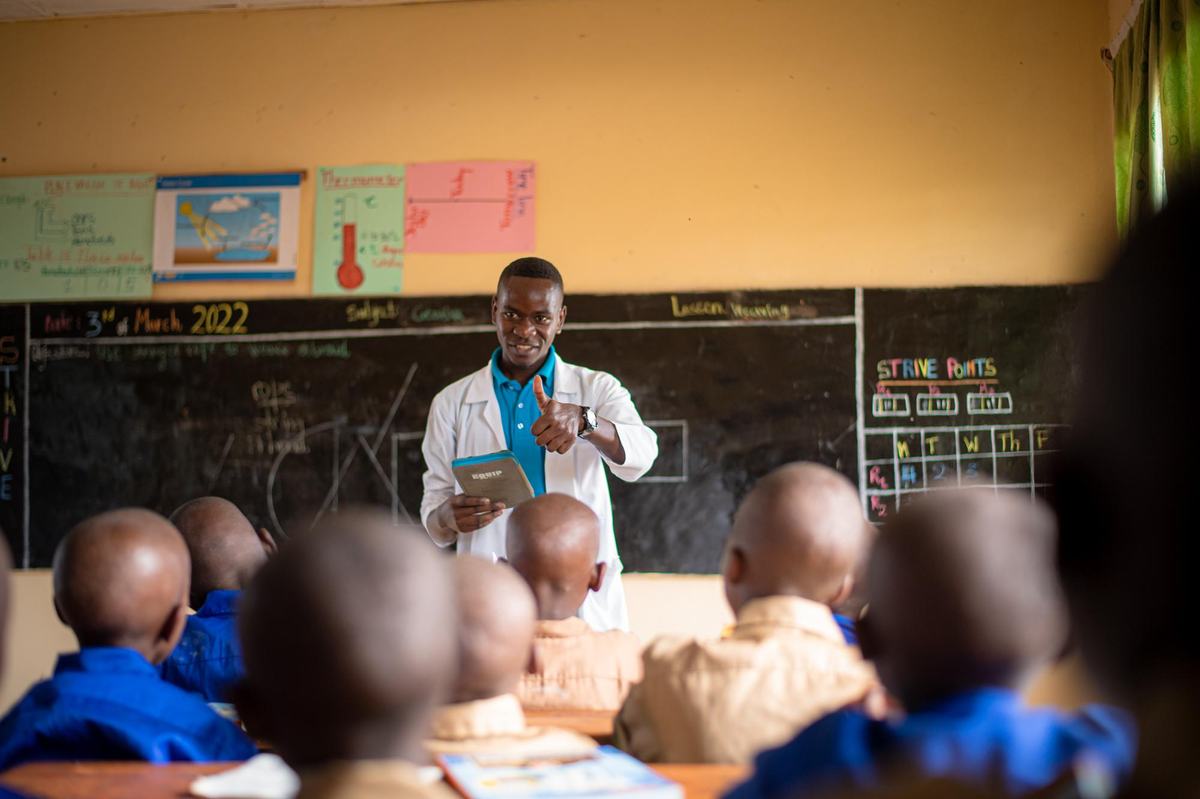

In early 2024, the RwandaEQUIP website — the official platform for Rwanda’s Education Quality Improvement Programme — published an important article titled: "Rwanda: Investing in People through Prioritizing Education". The article revealed a national political direction that goes beyond the idea of "improving education" to adopting human investment as a developmental creed of the state. In a small country that emerged from horrific genocides just three decades ago, this direction forms a transformative story worthy of reflection and inspiration.
Education: A Priority, Not Just a Service Sector
The Rwandan government does not view education as a service sector or a budget item, but rather sees it as a strategic lever that precedes infrastructure and the economy. This is clearly expressed in the article, which stated that the country "invests in people above all else," and that Rwanda’s Vision 2050 considers developing human capital a sovereign goal no less important than security and national sovereignty.
This direction comes within a package of integrative policies that includes:
- Intensive training for teachers using digital education systems.
- Development of national curricula supported by advanced educational technologies.
- Periodic assessments of the quality of outputs and teaching methods.
- Partnerships with the private sector to improve the educational environment.
The Shift from "Education" to "Education Quality"
What distinguishes the Rwandan model is that it does not only focus on increasing the number of schools or students, but redefines the purpose of education itself, through a focus on the quality of educational outputs, teacher qualification, and adapting teaching methods to the job market.
The article noted that the RwandaEQUIP program aims to bring about a radical change in the basic education system through smart tools that include:
- A unified electronic platform for daily lesson planning.
- Dynamic educational resources based on interaction and repetition.
- Hands-on training for teachers on effective classroom management models.
- Involving school leaders in impact assessment and performance monitoring.
Lessons for the Non-Profit Sector in the Arab World
Undoubtedly, the Rwandan experience represents an important lesson for the Arab non-profit sector, particularly in the fields of education and human development. Despite geographical and demographic differences, there are three approaches that can be inspired:
- Positioning education at the center of the comprehensive development plan rather than treating it as a compensatory service.
- Adopting quality and outcomes as performance indicators instead of merely focusing on the number of projects and grants.
- Adopting unified technical and training tools at a national or regional level, achieving efficiency and equity in distribution.
From Empowerment to Transformational Change
The Rwandan experience confirms that transformation in education does not occur through isolated initiatives or seasonal support, but through a clear national vision, strategic partnerships, and long-term investment in people's capabilities. This is exactly what the Arab non-profit sector needs: a shift from "empowerment" to transformational change.
In light of the aspirations of Saudi Vision 2030, human development programs, and quality of life initiatives, integrating the Rwandan experience into the design tools of educational projects for the Saudi non-profit sector can represent a qualitative leap that transcends support to impact.
https://rwandaequip.org.rw/news/rwanda-investing-in-people-prioritizing-education/
RwandaEQUIP, “Rwanda: Investing in People, Prioritizing Education”, 2024
Source:

Comments (3)
No comments yet. Be the first to comment!