
Introduction:
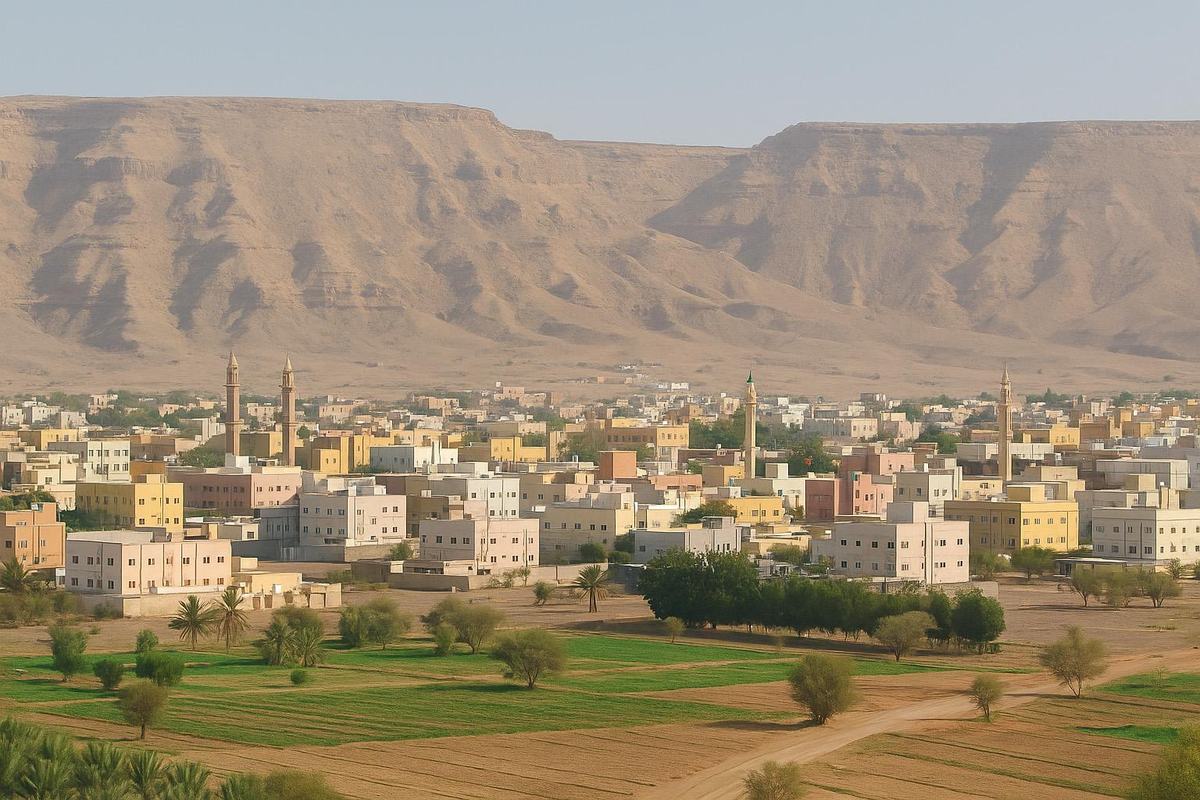
We at The Third Bank are pleased to host this qualitative article by writer Mr. Adib Al-Muhaydif, who presents an ambitious vision, grounded in reality, for the development of medium and small provinces in Saudi Arabia, through a roadmap that balances strategic analysis and community approach, linking local opportunities and national goals.
What’s new in this article?
What sets this proposal apart is that it does not repeat the narrative of "center and margin", but rather redefines medium and small provinces as untapped spaces for national growth, rather than mere areas in need of support.
The article addresses the issue from a holistic perspective, intersecting:
- Local economy: by attracting industries and stimulating entrepreneurship.
- Cultural identity: by preserving heritage and popular diversity.
- Social fabric: by encouraging community participation and empowering residents.
- Environment and sustainability: by protecting resources and achieving natural balance.
Methodology: From Theory to Planning
The author starts from an in-depth analysis of geographic and demographic variation, showing that approximately 11 million people inhabit these provinces, a huge human mass that cannot be ignored.
He then suggests transitioning from "fragile development" to "local empowerment", via a flexible implementation plan based on:
- Identifying the competitive advantage of each province
- Activating local governance tools
- Revitalizing tri-sector partnerships among the government, private, and non-profit sectors
The Role of Stakeholders: Redistributing Responsibility
The article focuses on redefining the roles of stakeholders:
- Private sector: an active investment partner, not a conditional donor. It intervenes in localizing projects, generating jobs, and stimulating services.
- Non-profit sector: a developmental player who addresses gaps, not just a provider of charitable services. It has the capability to establish developmental endowments, specialized associations, and social innovation centers.
- Local residents: not merely recipients, but participants in decision-making, initiatives, and planning.
Lessons from the Field: When Vision Becomes Reality
The author does not settle for recommendations, but presents us with real models:
- Sudair Industrial City
- Al-Ula Tourism Project
- The experience of Muhammad Al-Khudair's endowments in Riyadh Al-Khabra, which is a model to be emulated in education, culture, and community development.
These models confirm that investing in provinces is not a development luxury, but a strategic option to enhance local output and achieve spatial justice.
Toward Supportive Policies: What is Needed?
Some of the key recommendations proposed in the article are:
- Establishing a national institution concerned with the development of medium and small provinces.
- Creating a new classification for civil associations under the title "Urban Development Associations".
- Activating legislative incentives for both the private and non-profit sectors.
- Supporting the establishment of specialized endowment funds for local development.
- Encouraging universities and training centers to establish local presence.
This article is not merely a call for development, but a preliminary design for a feasible public policy, that breaks away from centralized planning and reinstates the importance of place and people.
Thus, it deserves to be discussed in municipal councils, chambers of commerce, and research centers, and to build upon it local, endowment, and community initiatives.

Comments (4)
No comments yet. Be the first to comment!