
How can the endowment transform from a traditional charitable tool to a structured model for financial sustainability for educational entities and programs?
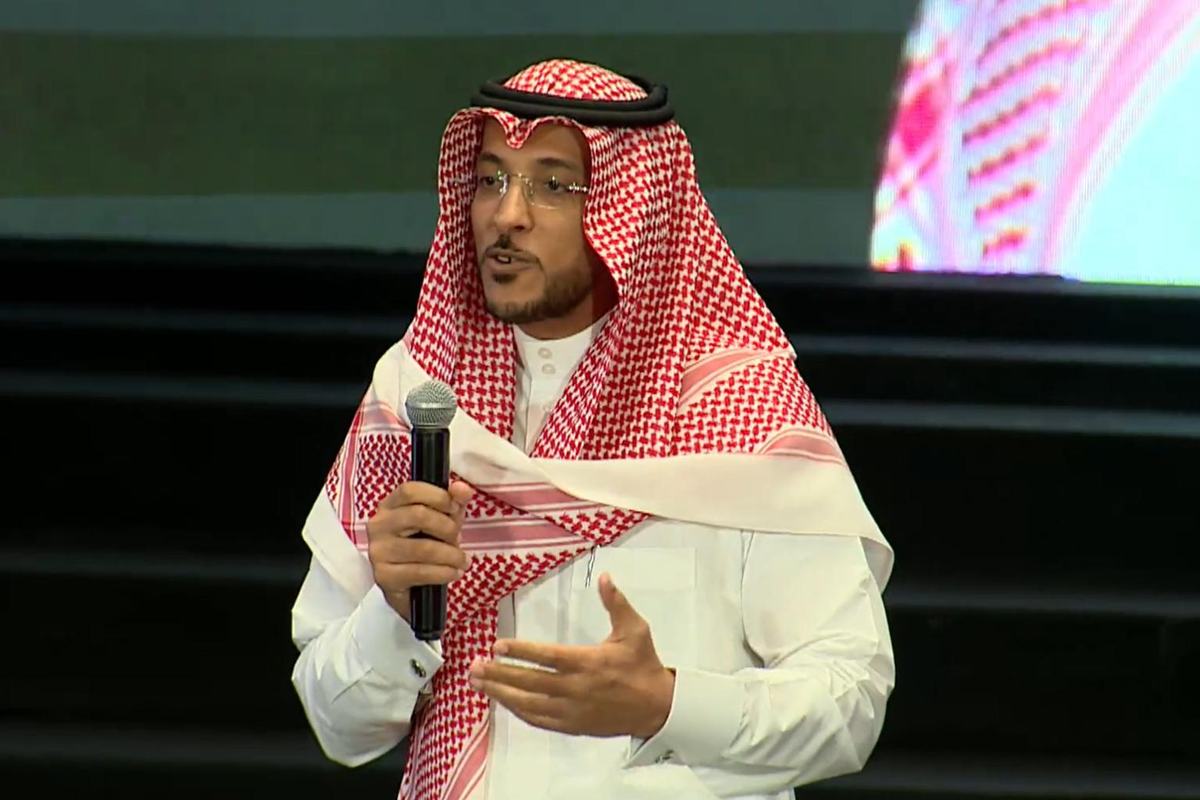
On the platform, Sultan Al-Huwaimel, Director of the Financial Sustainability Department at the General Authority for Endowments, presented a paper that can be said to have laid the intellectual and practical framework for everything that followed that day:
On the morning of Monday, November 17, 2025, corresponding to 26 Jumada Al-Awwal 1447 AH, the Sheikh Muhammad bin Ibrahim Al-Khudair Hall at Al-Yamamah University opened its doors to the first papers of the Educational Endowments Forum and Achieving Vision 2030 Goals in the Education Sector.
This report attempts to document that first paper, not as a visual presentation that passed quickly, but as a knowledge material that deserves to be read calmly and to be built upon for strategies.
The Endowment as an Authentic Model of Financial Sustainability
The endowment, in its essence, is not just a large donation that is spent and then its effect ends, but rather it is a financial and social design aimed from the beginning at continuity.
Al-Huwaimel started from a clear point:
When a benefactor decides to endow an asset, the endowment document is not limited to defining the beneficiaries, but usually sets two fundamental conditions:
- Allocating part of the revenues for the maintenance and protection of the endowed asset.
- Allocating another part for the development of this asset and maximizing its returns.
From here, Al-Huwaimel described the endowment as "a unique model of financial sustainability," not only for the endowed entity but also for every entity connected to it: a university, a charity, or a granting institution.
With this simple engineering, the endowment transforms into a motor of self-sustainability; the asset is maintained, the returns are developed, and the revenues renew year after year.
The benefactor who mandates "water supply," for example, faces two models:
The entities that the endowment's expenditures are assigned to.
Then it shifts to another aspect of sustainability:
- That the supervisor himself purchases the water and distributes it.
- Or that the implementation is entrusted to a governmental body or a nonprofit organization that has the ability and expertise to deliver the service to the deserving groups.
In the second model, the endowment becomes a lever of sustainability for that implementing body; it receives recurring funding for its programs and builds its operational capabilities over time. Thus, the endowment becomes a link between the sustainability of the asset and the sustainability of the program and entity at the same time.
From the Traditional Model to Maximizing the Benefactor's Condition
The authority, in principle, is a regulatory, legislative, and supervisory body for the endowment sector, but at the same time, it oversees a group of endowments, placing it in a position that combines public policy and field practice.
After consolidating the idea of the endowment as a model, Al-Huwaimel moved on to discuss the General Authority for Endowments and its role.
Al-Huwaimel reviewed the value chain within the authority: from the moment of receiving the endowment, to preparing and adapting it, then managing and investing it, reaching managing the conditions of the benefactors, then designing expenditure programs, and concluding with measuring the impact.
Maximizing the Impact of the Benefactor's Condition.
However, the evolution of thinking within the authority led to a new concept that has become one of the pillars of its work today:
The condition of the benefactor for water supply, where the authority allocates a sum to purchase water bottles and distribute them.
In the early days of the authority, the implementation of the benefactors' conditions was carried out in the traditional way:
This philosophy is evident in designing participatory programs, or linking expenditure to financing and guarantee products, or investing part of the assets in a way that enhances the implementing entity's ability to continue.
It is not enough for the impact of one riyal to be one riyal for the final beneficiary, but rather ways are sought to make this riyal generate a multiplied impact: financially, socially, and developmentally.
More precisely:
Achieving financial sustainability for the nonprofit sector and the entities benefiting from the endowments, as it is a natural extension of maximizing the impact of the benefactors' conditions.
From here came one of the targets of the authority's first strategy:
What is financial sustainability? From theory to field reality
In the private sector, it may be reduced to profitability, in the government sector to spending efficiency, while in the nonprofit sector, it intertwines with concepts of "financial stability," "governance," and "diversifying income sources."
The term "financial sustainability" seems simple, but its meaning differs from sector to sector.
Al-Huwaimel pointed out a conceptual issue they faced in the early days of work:
Thus, the authority took two parallel paths:
Internal knowledge effort integrated with consulting expertise houses to formulate a practical definition of financial sustainability suitable for endowments and nonprofit entities.
The essence of this definition is that sustainability is the state where the organization is able to manage its financial resources efficiently in an environment capable of generating more resources, ensuring it achieves its goals in the long term.
A field study of the reality through tours around the Kingdom and direct meetings with endowments and charitable organizations, to monitor:
- The level of financial and administrative maturity,
- The challenges in financing and investment,
- The aspirations of an entity that sees the authority as a partner in building sustainability, not just a regulatory body.
This comparison between theory and reality led to a third stage which is global benchmark comparisons, where the authority studied international experiences in financial sustainability, including university endowment experiences that were presented in the forum itself.
From this journey, the authority emerged with a set of lessons learned that Al-Huwaimel said are not exclusive to the authority but "benefit any entity wishing to establish an endowment or operate under the umbrella of the endowment," among the most prominent:
- Assigning investment tasks to licensed specialized entities, instead of trying to do everything internally.
- Diversifying financial and investment tools and products, and not relying on a single tool or market.
- Considering endowment assets as a wide spectrum that includes cash, real estate, and direct investments, not just as a bank account.
Work Tracks of the Financial Sustainability Management in the Authority
The work was divided into five main tracks:
After building the conceptual foundation, Al-Huwaimel opened the "office door," as he described, for attendees to enter into the details of the financial sustainability management work within the authority.
The authority has also developed tools targeting specific categories:
Later, new models emerged that invest part of the fund's assets in projects related to its sector, such as a fund that supports research and innovation in collaboration with the research, development, and innovation system, another with the agriculture, environment, and water system, and a fund to activate idle real estate endowment assets in partnership with the support fund for associations.
Its models evolved from a fund for one benefiting entity to sectoral funds (such as orphan associations or associations in a specific region), then to developed joint models that allow multiple entities to participate without complex conditions.
These funds are fully regulated, subject to the supervision of the Capital Market Authority and the General Authority for Endowments, and managed by specialized financial companies.
Here, endowment investment funds emerge as one of the most important innovations globally, as he described.
Financial tools
- "Temporary endowment" funds for donor institutions wishing to invest their funds for a limited period, with the returns allocated to the entities, such as the "Aswaq Development Fund."
- Funds to invest surplus funds of endowments and nonprofit entities in line with their requirements, such as "Future Investment" funds.
- Endowment investment portfolios for individuals that allow any person to open a digital endowment portfolio with amounts starting from simple levels and track its performance in minutes.
Financial Solutions
Here, the authority has shifted from being a direct funder to a role as a "maximizer of impact" through joint guarantee and financing portfolios.
It studied the map of funding entities in the Kingdom: the Islamic Development Bank, the Social Development Bank, the Suleiman Al-Rajhi Foundation for Development Financing, commercial banks, and others.
Then it opened guarantee and financing portfolios at these entities in favor of endowments and the nonprofit sector, transforming the authority's contribution amount (about 280 million riyals) into a funding capacity exceeding 2.8 billion riyals, that is, ten times, in a practical embodiment of the idea of maximizing the impact of the benefactor's condition.
Consultations and Endowment Models
A track that was not expected to have much impact initially, but it turned into a main channel.
Requests began from government entities seeking funding, then evolved into partnerships in designing endowment financing and investment models for projects exceeding 130 billion riyals, in sectors not directly related to charitable work, but looking for innovative endowment sustainability models.
Financial Sustainability Requests
The authority designated digital platforms to receive requests from endowments and associations, with an internal commitment to respond within one business day.
The response may be written advice, a virtual meeting, or a phone call, but the important message here is that financial sustainability has become a corporate service not a seasonal initiative.
Al-Huwaimel presented two models for endowment factories:
Endowment Factories and Social Investment
- A meat factory benefiting from sacrificial meat and offerings.
A water factory.
These projects combine social investment and endowment character, representing practical experiences of what productive assets with direct developmental impact can look like.
Achievement Figures… From Ambition to Reality
Al-Huwaimel did not limit himself to narration, but rather displayed a set of figures summarizing what has been achieved:
- Ten financial tools currently in place, on track to become eleven tools with a new agreement.
- The targeted assets’ volume through these tools is close to ten billion riyals, and about three billion has been achieved so far.
- Eight financing and guarantee portfolios, in which the authority contributes 280 million riyals, against a targeted financing impact of 2.8 billion riyals.
In addition, he referred to supporting tracks such as:
- Namo Forum for Financial Sustainability which witnessed the signing of agreements exceeding six billion riyals.
- Financial Sustainability Award which he described as "the largest award of its kind in the world," with a total value of 250 million riyals distributed over five years, at a rate of fifty million yearly in the form of endowment investment units, not cash amounts.
- The National Standard for Financial Sustainability for endowments and associations, which will be the approved evaluation tool for the award in its upcoming rounds, enabling each entity to measure its progress and plan to elevate its levels.
What Does the Authority Want from University Endowments?
He reminded that there is a deep historical legacy connecting endowment and education, from endowment schools in Islamic history to contemporary global universities that rely on massive endowments to finance their programs.
Al-Huwaimel concluded his paper by returning to the forum's topic: educational endowments.
However, his message to Saudi university endowments was clear and sharp:
University endowments should not remain in a narrow traditional framework: assets invested in a portfolio, returns disbursed, and reports submitted to the supervisors at the end of the year.
The requirement is for university endowments to transform into a motor of innovation and development within the educational system.
From the expected outputs of university endowments:
- The number of researches that transformed into real investment opportunities.
- The number of startups and entrepreneurs that the university has adopted through its endowments.
- The size of social investment that the university implements as a partner, not just a recipient of grants.
- No need to reinvent the wheel; university endowments can start from where the General Authority for Endowments and the financial sector ended in endowment investment fund models and financial and guarantee tools, and then add new innovations that suit their university environment.
Endowments are an ideal partner for all parties:
- For the government, which seeks to achieve sustainable national goals.
- For granting institutions that want a profound impact connected to education and students.
- For nonprofit organizations that can implement their programs with stable endowment funding.
- And for the private sector that finds in endowments a platform for community partnerships and social investment.
Endowments are not a solution to an immediate problem, but a long-term strategic solution, and a "patient" investor looking for impact, not quick profits.
Therefore, they should not be managed with the mentality of short-term donations and grants, but rather with a long-term planning mentality, sound governance, and investment in the entity's capabilities before investing in its assets.
From the Al-Yamamah Platform to the Map of the Nonprofit Sector
In fact, it was a roadmap for a new phase of thinking about financial sustainability in the Kingdom.
Sultan Al-Huwaimel's paper in the first session of the Educational Endowments Forum at Al-Yamamah University was not merely an introductory presentation about the achievements of the General Authority for Endowments;
Thanks to this presentation, the attendees – and behind them today's readers – emerged with a clearer picture of:
- The meaning of financial sustainability in the context of endowments and the nonprofit sector.
- The potential role of the General Authority for Endowments as an enabler and partner, not just a regulatory body.
- The enormous potential inherent in university endowments if they surpass the traditional framework and decide to lead education and development rather than merely keeping pace with it.
And the credit goes to Al-Yamamah University for enabling this discussion to begin from a Saudi university hall, at a moment when educational endowments are transforming from an idea into reality, and from scattered initiatives to a national organized path towards the sustainability of education and its vision for 2030 and beyond.

Comments (2)
No comments yet. Be the first to comment!