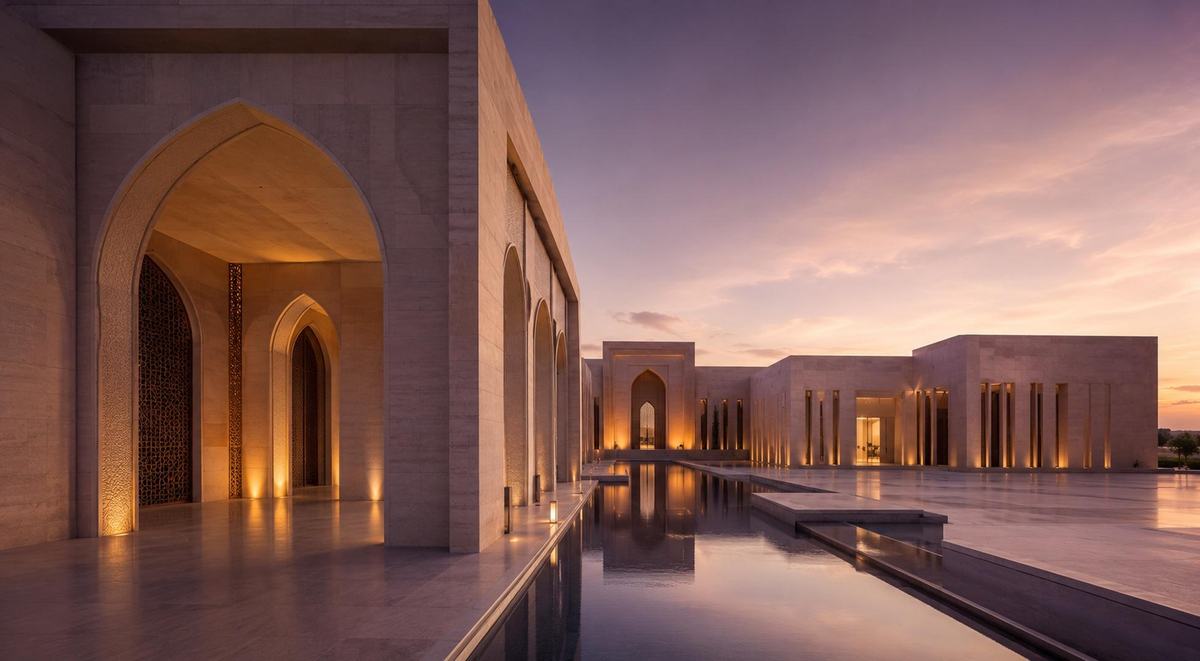

At its core, the endowment was not a delayed donation, but rather an early civilizational model for converting money into a continuous benefit that does not stop at addressing a transient need, nor does it end with the moment of giving; it preserves the principal amount and directs its benefits to serve humanity year after year.
Thus, the endowment has remained relevant in education, care, water, health, and helping those in need; because it is based on a simple yet profound idea: to keep the principal productive, and to transform its returns into renewed good. Today, this idea returns to the global forefront through modern investment models attempting to combine religious meaning, institutional governance, and financial sustainability.
In this context, Human Appeal, a British humanitarian organization, announced the launch of a new affiliate entity called The Waqf Fund: the term affiliate entity implies that it is an institution linked to the parent organization, working within a specific field, and having a clear operational identity. The endowment fund is a pool where donations are collected, then invested in a manner compatible with Islamic law, with the investment returns used to finance humanitarian and developmental projects.
The concept is based on the fundamental difference between direct donations and endowments. Direct donations address an existing need at the moment, while the endowment seeks to build a continuous resource that can serve the same need repeatedly over time. This is where its strength lies; it does not view good as a momentary expenditure, but as a financial capability that can grow and persist.
The original news indicates that the value of endowment assets globally is estimated to be between $700 billion and $1 trillion and it should be noted that this figure does not mean that the new endowment fund owns this value, nor that it has raised this amount of money, but refers to estimates of the size of the global endowment market. Here, the market refers to the total of assets, funds, and opportunities related to endowments around the world, not the market in the narrow commercial sense.
This clarification is crucial so that the headline is not read as an announcement of a huge fund worth $700 billion, but rather as a new institutional entry into a vast global field, where attempts are increasing to transform the endowment into a more organized and transparent financial tool capable of growth.
The Waqf Fund model is based on receiving contributions from donors, then investing them in halal and sharia-compliant assets, such as real estate, and the investment asset here refers to what retains its value and can generate income, such as rented buildings or income-generating assets. After generating income from these assets, the returns are directed to Human Appeal projects in various humanitarian fields.
These fields include, according to the news, water and sanitation, education, orphan care, emergency relief, and healthcare. These are areas not only associated with providing transient assistance but also relate to basic human needs that typically require stable funding that does not quickly diminish.
The notable aspect of the model is that it does not stop at the idea of investment and then expenditure; it also speaks about reinvesting a portion of the returns, a concept known in finance as compounding, which means that part of the return is not spent directly, but is reinvested into the principal or re-invested anew, allowing the size of the fund to grow gradually. In this way, the impact can expand over time, instead of being confined to the value of the initial donation.
The news mentions that the fund aims for an average annual return of about 7%. This statement should be treated as an investment goal or potential estimate, not as a definite guarantee. Investment, by nature, is associated with risks and market changes, even when in seemingly stable assets such as real estate. Therefore, the importance of governance, disclosure, and risk management in any modern endowment model increases.
From the donor's perspective, The Waqf Fund attempts to present the endowment in a more accessible manner. Participation does not seem to be restricted to those with large fortunes but is available for contributions of different sizes, which is an important development; because endowment in social memory has sometimes been associated with major endowers or massive assets, while modern models aim to make endowment participation available to a broader segment of people.
However, the deeper importance does not stop at the ease of donation but at changing the way of thinking about giving itself. When an individual participates in an endowment, they do not provide assistance that ends with expenditure, but contribute to building a principal that can have a lasting impact for many years. Here, the donor transitions from a logic of immediate response alone to a logic of building ongoing capacity for response.
The administrators of The Waqf Fund connect this idea to the concept of Sadaqah Jariyah, which refers to charity that remains beneficial continuously. This connection is important religiously and cognitively; as it clarifies that the model is not merely a modern financial tool dressed in charitable clothing, but rather an attempt to reactivate an ancient religious meaning within a contemporary institutional and investment environment.
For his part, Professor Kamel Omotisou, Chairman of the Board of Trustees of The Waqf Fund, explained that the fund seeks to provide a safe and impactful endowment that supports charitable causes and gives Muslim donors a means of giving consistent with their religious principles. This statement reveals an important aspect of the idea; as the fund addresses the donor not only from the perspective of social returns but also from the perspective of legal reassurance and the spiritual meaning of giving.
Dr. Mohamed Ashmawi, CEO of Human Appeal, noted that the launch of The Waqf Fund enhances the organization's ability to reach the most in-need populations worldwide, raising an important question for charitable institutions: How can resources be built that do not rely solely on seasonal campaigns or intermittent donations, but on assets capable of generating continuous income?
The experience provides a practical example of this through an endowment investment in an office building in the Greater Manchester area, leased under a long-term contract to one of the major law firms. The importance of this example is that it brings the idea closer to reality; the endowment here is not a general slogan or a static bank account, but a rented real estate asset, generating income, which is then redirected to serve charitable purposes.
However, the experience should not be viewed solely from the angle of admiration. Investment endowment models require precise questions regarding transparency, returns allocation, expense calculation, percentages of reinvestment, levels spent on projects, and risk management. As the endowment asset grows, the need for clearer governance increases; because trust in the endowment is not built solely on good intentions, but on good management and transparency.
The value of this news lies in its re-presentation of the endowment within a globally understandable language for both financial and charitable institutions. It combines familiar terms in Islamic heritage, such as endowment and Sadaqah Jariyah, with modern terminology like investment, return, income-generating assets, and financial sustainability. This combination is not merely a linguistic detail; it reflects a shift in the position of the endowment within the global discourse on impact financing.
Perhaps the most prominent lesson here is that the endowment does not need to lose its spirit to become modern. It can maintain its legal and human meaning while also evolving in its tools, governance, and how it presents itself to donors. The essence of the endowment is that it protects the money from rapid consumption, transforming giving into a continuous benefit, and this idea remains capable of operating in today’s world whenever it is managed efficiently and transparently.
In this regard, The Waqf Fund affiliated with Human Appeal represents not just news of the launch of a new charitable initiative, but a signal of a broader trend: the return of the Islamic endowment to the global arena as an investment format for impact. When managed with an institutional mindset, money does not return to being a mere donation that is spent, but transforms into a beneficial asset, an active financial memory, and a continuous capacity for generating good after the initial moment of giving has ended.
This material is translated and edited based on published news on the Human Appeal website regarding the launch of The Waqf Fund, with rephrasing to suit the Arab reader interested in the endowment and non-profit sector.

Comments (2)
No comments yet. Be the first to comment!