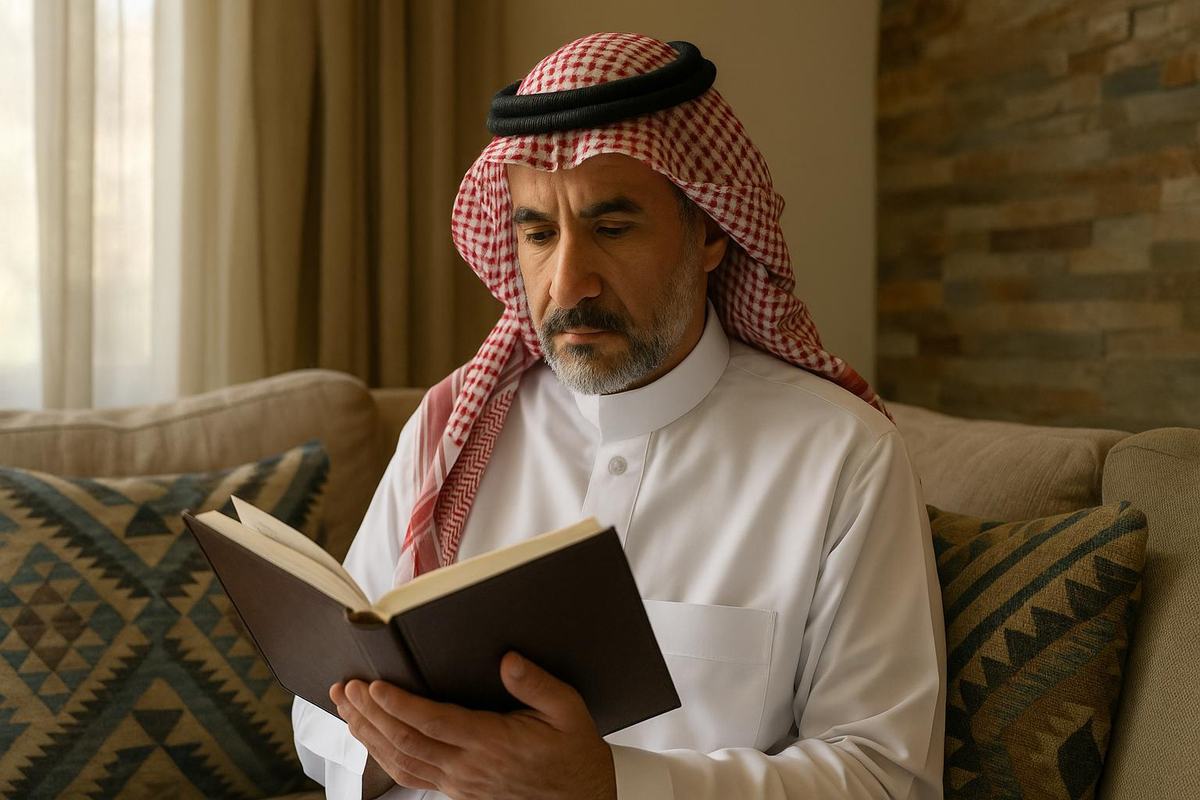

The thirty-first enriching meeting was organized under the title “Spiritual Governance of Endowments,” at the invitation of the Future Investment Foundation, and with the participation of Prof. Dr. Abdulrahman bin Abdullah Al-Sugair, President of Knowledge University and its board chairman, where he presented profound ideas that redefined the relationship between values and systems, between intention and management, between the essence of the endowment and its external form.
We attended the meeting to emerge not simply with a lecture, but with a map of reflections and big questions that deserve to be etched on the walls of every charitable association and endowment institution.
In this article, I share with you 10 thoughts inspired by the meeting, written in various intellectual styles to reach every mind and heart.
1. Governance begins from the conscience of man, not from the structure of the system
Civilizations are not built from cement, but from ideas that dwell in souls. When the conscience fades, endowments turn into cold entities, no matter how precise their regulations are. A sincere intention is the first cornerstone for every endowment that lasts for centuries.
2. Great endowments are not made by contract texts, but by tangible experiences
Just as technological products are not made by buttons alone, endowments are not built by regulations alone. Rather, they are created by a vision that lives in the details and translates into feeling. What distinguishes an endowment is not its form, but what it brings about in people's lives.
3. When the endowment loses its spirit, it turns into an administrative corpse
Texts do not create trust, and systems do not replace sincerity. An endowment is a contract with God before it is a document with the courts. Unless we introduce “self-monitoring” into the boards of trustees, some endowments will continue to be managed… but they will not have an impact.
4. Sincere intentions may be more important than capital
There is no difference between a successful project and another struggling in appearance only, but also in essence. We have seen in reality those who invested little with a pure intention, so they bore fruit, and those who managed millions in a corporate manner but without internal warmth, thus struggling. Intention is a productive element no less than the budget.
5. An endowment does not thrive unless the stipulations of the founder are fulfilled both outwardly and inwardly
What spoils many endowments is not a lack of system, but the interpretation of the founder's stipulation until it is emptied of its content. Governance can only be complete if we combine the outward text and the inner intention, and between the jurisprudence of management and the jurisprudence of trust.
6. True governance begins from a living conscience, not from a rigid text
When an endowment becomes merely a financial transaction, we lose its essence. But if we treat it as a trust, as a renewing act of worship, it becomes a source of blessing. The difference between an endowment that endures and another that withers… is the heart that carries it.
7. Not every governed endowment is regulated
Regulations do not mean success. In fact, some endowments that have lasted for centuries were never registered in any system, but remained because their people embodied the intention. The difference between an endowment managed on paper and another managed out of fear of God is not made by systems.
8. Intention is the unwritten strategy, but it makes the difference
The greatest organizations are those that embed values in their operations. Prof. Dr. Abdulrahman Al-Sugair’s talk was a call to rethink our organizational culture: Do we manage endowments as financial assets? Or do we improve their marketing as a lasting impact that we will be held accountable for before God?
9. The life of an endowment lies in the sincerity of its overseer, not in the length of its regulations
Intention cannot be measured, but it can be felt. An endowment does not endure by regulations, but by the sincerity of the overseer when he feels that he is a trustee, not a manager. If intention is absent, all governance becomes ink on paper.
10. Some endowments die gracefully… on polished paper
We have seen endowments managed meticulously… yet devoid of life. The secret? The absence of intention, the lack of shame before God, and the lack of feeling that an endowment is a trust, not a transaction. Some schools in Al-Ahsa have remained standing for hundreds of years, not due to documentation… but because of piety.
In conclusion, at a time when standards are increasing and procedural evidence is accumulating, we need to return to intention, to governance that starts from within, to say as the lecturer stated: “An endowment does not live unless its condition lives and its intention is sincere.”
Thank you to Future Investment for the invitation and organization, and to Dr. Abdulrahman Al-Sugair for this enrichment, which was not just a lecture in management, but a lesson in life.

Comments (3)
No comments yet. Be the first to comment!